Asbestos Floor Tile Removal
How asbestos floor tile and mastic removal works, what licensed crews do differently, and what the work costs per square foot in the US.
Asbestos floor tile removal is a licensed abatement job costing $10 to $25 per square foot, plus testing at $50 to $150 per sample. Tiles are usually non-friable, but the mastic beneath releases fibers when scraped.
- Floor tile removal
- $10 - $25 per sq ft
- Bulk testing
- $50 - $150 per sample
- General abatement
- $20 - $50 per sq ft
- Typical era
- Tile and mastic made before the late 1980s
- Who does the work
- State-licensed abatement contractors only
Some links on this page are affiliate links.If you buy through them we may earn a commission at no extra cost to you. We do not accept payment for rankings. Read the full disclosure.
Asbestos floor tile removal costs $10 to $25 per square foot for the tile itself, and the mastic underneath is often priced as a second material because it usually contains asbestos too. Tiles from the 1950s through the 1980s are the common culprits, and intact tile is only low-risk until someone pries it up. Testing comes first, and the removal itself is a licensed abatement job.
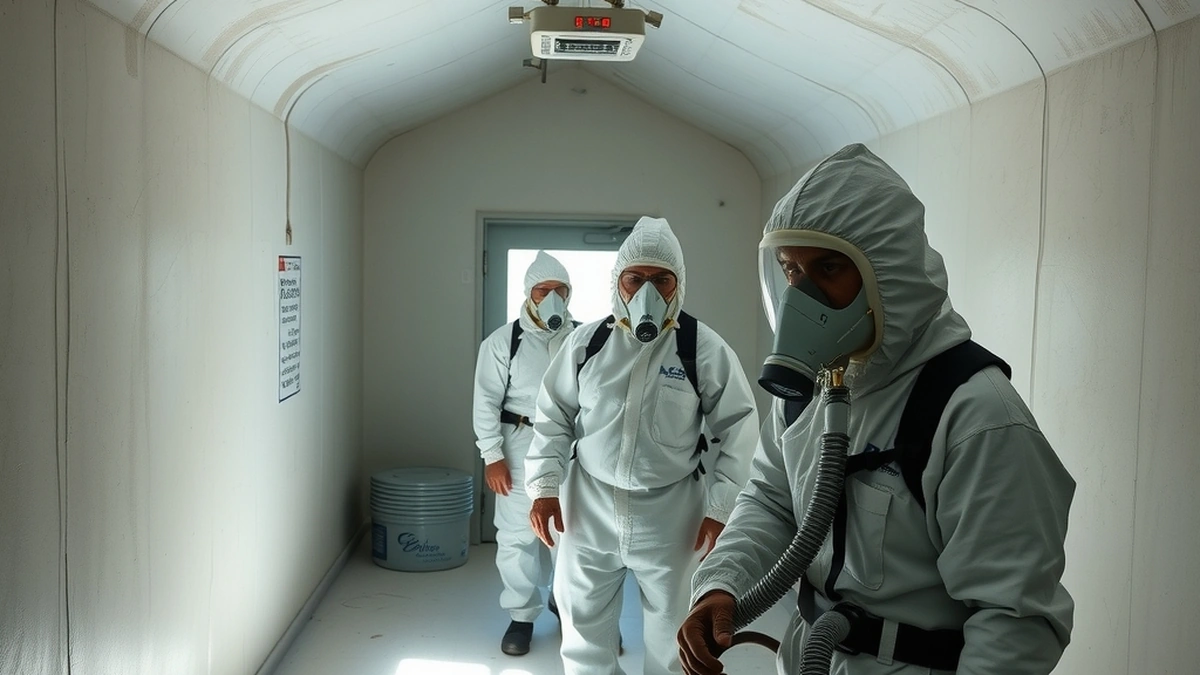
Asbestos floor tile removal is the controlled lifting of asbestos-containing vinyl or asphalt tile, and the adhesive bed beneath it, under containment with wet methods, HEPA filtration and regulated disposal. It is not a flooring job with extra care taken. The containment, the air machines and the waste manifest are the work.
Why Tile Behave Differently From Pipe Insulation
Pipe insulation is friable, meaning it crumbles under hand pressure and releases fibers readily. Vinyl and asphalt floor tile are classified as non-friable because the asbestos is bound in the matrix. That difference matters for how the job is set up, not for whether it is regulated.
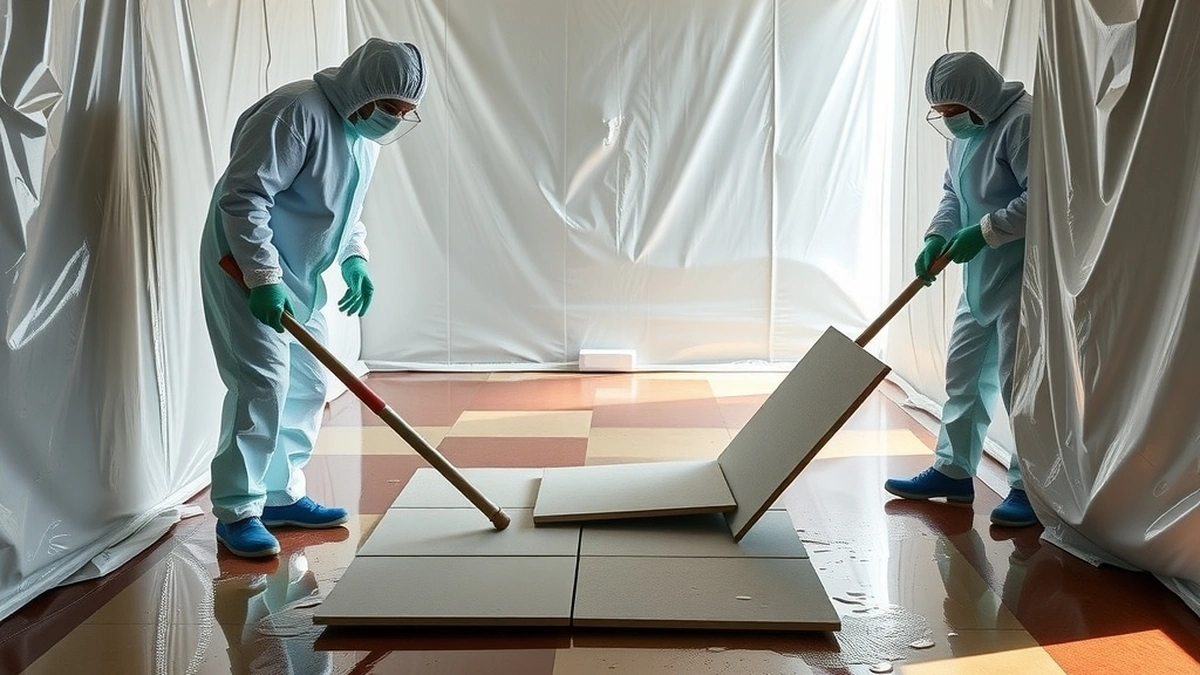
The risk arrives at the edges. A tile that snaps, or a mastic that is scraped or ground, produces dust. Sanding the adhesive off a concrete slab is one of the worst things that can happen to a floor, because it turns a bound material into an airborne one. Licensed crews avoid that by softening the adhesive and lifting the tile whole wherever the bond allows it.
The Mastic Is Usually the Bigger Problem
Black cutback adhesive is the troweled-on bed under most of these tiles, and it is frequently asbestos-containing. Because it is a thin film bonded to concrete or plywood, it cannot be lifted like a tile. It is either softened and scraped wet, or removed by floor grinder with dust extraction and full containment.
That is why a quote that only prices tile is incomplete. A 200-square-foot kitchen with tile at $15 per square foot is $3,000, but if the mastic needs grinding the labor roughly doubles. Ask which of the two materials was sampled and which was priced. Our guide to floor tile and mastic warning signs covers what to look at before any of this starts.
Removal Methods Licensed Crews Use
Four methods show up in residential work, and the choice depends on the substrate and the bond:
- Wet lifting. The floor is misted, tiles are pried whole with a scraper, and debris goes straight into sealed bags. Lowest dust, works when the bond is failing.
- Heat softening. Controlled heat softens the adhesive so tiles release without snapping. Common on vinyl tile over plywood.
- Chemical softener. A gel or solvent is applied to the mastic, then scraped wet. Used on concrete where grinding is not possible.
- Contained grinding. A grinder with HEPA extraction removes mastic residue under negative pressure. Highest dust potential, so containment and air monitoring are strictest.
None of these are homeowner tasks. Each generates waste that must be bagged, labeled and hauled to a landfill permitted to accept asbestos, which is the same chain described in disposal cost.
What the Numbers Look Like
The canonical ranges are simple. Tile removal is $10 to $25 per square foot. General abatement, which applies when the job is scoped as a full containment rather than a floor-only job, is $20 to $50 per square foot. Testing is $50 to $150 per sample.
| Area | Tile only at $10-$25 | With mastic work at $20-$50 |
|---|---|---|
| 120 sq ft bathroom | 120 x $10 = $1,200 to 120 x $25 = $3,000 | 120 x $20 = $2,400 to 120 x $50 = $6,000 |
| 200 sq ft kitchen | 200 x $10 = $2,000 to 200 x $25 = $5,000 | 200 x $20 = $4,000 to 200 x $50 = $10,000 |
| 600 sq ft basement | 600 x $10 = $6,000 to 600 x $25 = $15,000 | 600 x $20 = $12,000 to 600 x $50 = $30,000 |
Add testing to every row. Three samples at $100 each is $300, and a survey at $500 to $800 often comes before that. Those are estimates, not quoted prices; access, floor covering layers and whether the slab is scored all move the number.
Removal vs Encapsulation vs Overlay
Not every intact tile floor has to come out. The three routes are compared below, and the deciding factor is condition plus what the next renovation will do to the floor.
| Route | What happens | Cost basis | Main constraint |
|---|---|---|---|
| Full removal | Tile and mastic lifted, waste manifested | $10-$25 per sq ft tile, $20-$50 with mastic | Highest cost, cleanest result |
| Encapsulation | Sealant applied over tile and joints | $5-$15 per sq ft | Material stays in place and must be re-inspected |
| Overlay | New flooring installed over intact tile | Finished flooring cost only | Only where the tile is sound and local rules allow |
Encapsulation is the cheaper option at $5 to $15 per square foot against $20 to $50 for full abatement, but it does not remove the hazard. Any later demolition reopens the question. Our comparison of abatement vs encapsulation walks through when each is defensible.
The Process From First Sample to Clearance
- Book an inspection and have each distinct material sampled, including the mastic, the tile and any underlayment.
- Receive the survey report and confirm which rooms and which square footages are in scope.
- Approve a written scope that separates tile, mastic, containment, disposal and clearance testing.
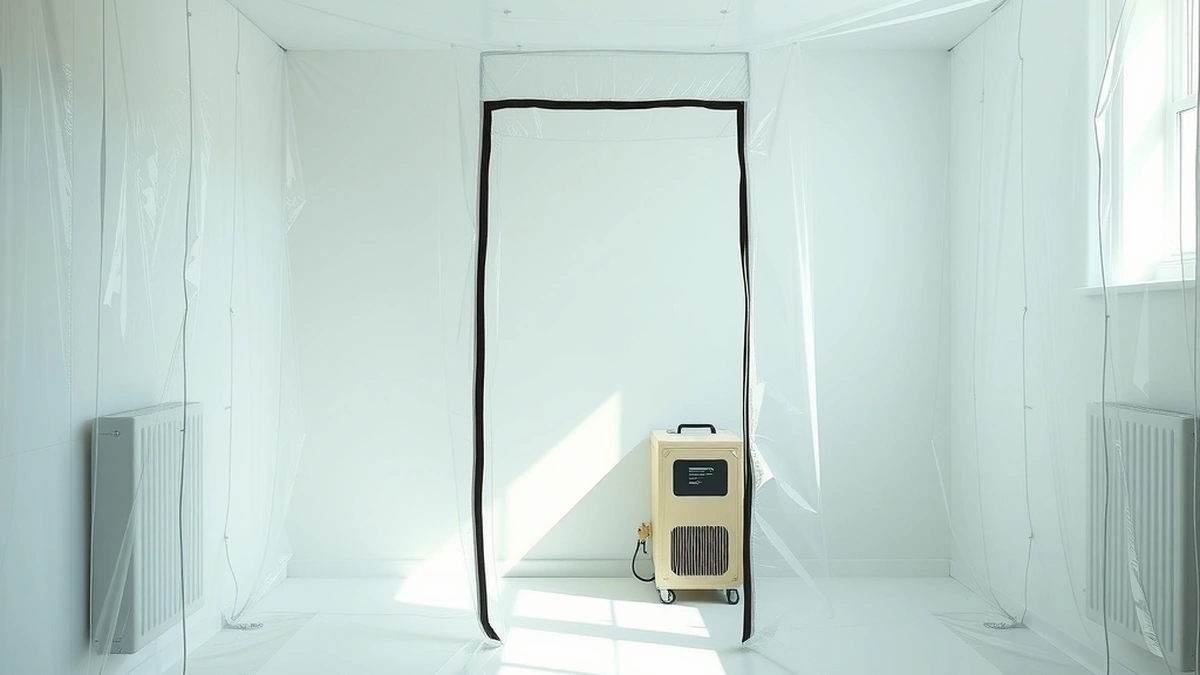
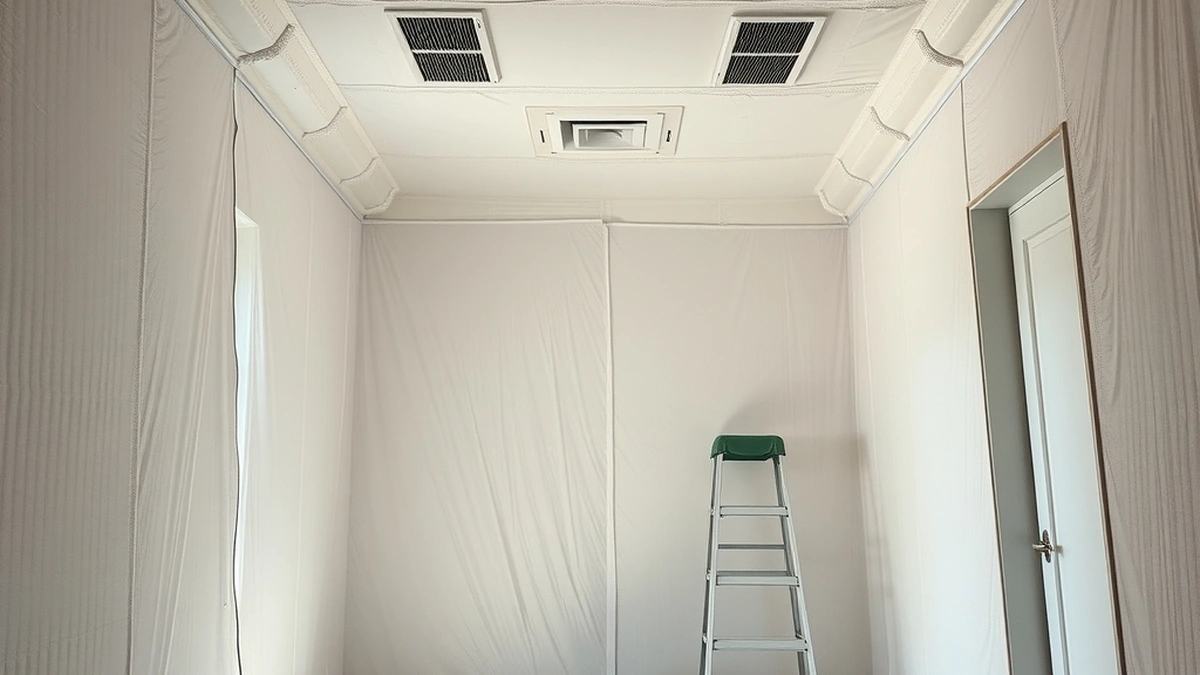
- Before work starts, clear the rooms and confirm how the crew will seal doorways and HVAC registers.
- After removal, review the clearance results and keep the waste manifest with the survey report.
Step five is the one owners skip. Without the manifest you cannot prove the material went to a permitted facility, and that paperwork matters at resale.
Scheduling Around an Occupied House
Containment needs one to two feet of working space on every side, so furniture comes out of the room. A single bathroom is typically a one-day job. A kitchen with cabinet toe-kicks and appliance moves runs two days. A full basement with mastic grinding runs three to four days.
Plan for the room to be unusable through the clearance wait, since air sampling results can take a day to return.
What to Ask Before You Book
Ask for the license number and the state database entry, the sample locations on the report, and the landfill name on the manifest. Ask whether the mastic is included at the quoted rate or billed separately. Ask who performs clearance testing and what result allows the room back into service.
For the wider pricing picture, read asbestos floor tile removal cost and the general asbestos removal cost guide. If the tile is intact and you are weighing options, asbestos encapsulation cost shows what sealing would run. Under no circumstances should a homeowner drill, pry, sand or sweep suspect tile; a single sample from a licensed inspector settles the question for the price of a service call.
Frequently asked questions
How much does asbestos floor tile removal cost?
Floor tile removal typically runs $10 to $25 per square foot, and testing each distinct material costs $50 to $150 per sample before work can be scoped.
Is asbestos floor tile friable?
Intact vinyl tile is usually classified as non-friable, but the mastic beneath it and any damaged or crumbling tile can release fibers when disturbed.
Can I pull up asbestos tile myself?
No. Even non-friable tile becomes a fiber-release risk once it is pried, broken or scraped, and disposal is regulated, so the work belongs with a licensed contractor.
Can new flooring go over asbestos tile?
Sometimes, if the tile is intact and local rules allow it, but the decision requires an inspection and a contractor's written assessment rather than a homeowner's judgment.
Does the mastic contain asbestos too?
Often yes. Black cutback adhesive from the same era frequently contains asbestos, so it is sampled and priced as a separate material.
How long does floor tile abatement take?
A single room is often a one-day job once containment is built, while a whole floor with mastic removal usually runs two to four working days.
Sources
Some links are affiliate links.If you buy through them we may earn a commission at no extra cost to you. We do not accept payment for rankings. Read the full disclosure.