Asbestos Abatement Process: Steps, Costs, and Safety
A regulated overview of the asbestos abatement process, from inspection and containment to removal, disposal, and clearance testing.
The asbestos abatement process is a regulated sequence of inspection, containment, removal or encapsulation, decontamination, and clearance performed by licensed professionals.
- Typical abatement cost
- $20–$50 per sq ft
- Pipe insulation removal
- $25–$75 per linear ft
- Floor tile removal
- $10–$25 per sq ft
- Encapsulation
- $5–$15 per sq ft
- Asbestos survey
- $300–$800
Some links on this page are affiliate links.If you buy through them we may earn a commission at no extra cost to you. We do not accept payment for rankings. Read the full disclosure.
The asbestos abatement process is a regulated sequence of inspection, containment, removal or encapsulation, decontamination, and clearance testing. It is designed to prevent asbestos fibers from becoming airborne and spreading through a building. Because asbestos exposure carries serious health risks, abatement should be performed by licensed professionals using engineered controls and approved disposal methods.
This article explains each stage of the asbestos abatement process, what property owners can expect, and how costs are typically estimated. All dollar figures are estimates and vary by location, material condition, and project scope.
1. Inspection and Asbestos Testing
Before any abatement work begins, a qualified inspector must determine whether asbestos-containing materials (ACM) are present. Visual identification alone is not sufficient. The inspector collects bulk samples of suspect materials—such as pipe insulation, floor tile, ceiling texture, or roofing felt—and sends them to an accredited laboratory for analysis.
Bulk testing typically costs $50–$150 per sample. If a full property survey is needed, the cost often ranges from $300 to $800 depending on square footage and the number of materials sampled. Testing confirms whether asbestos is present, identifies the material type, and helps determine whether the material is friable, meaning it can be crumbled by hand pressure and is more likely to release fibers.
Property owners can learn more about the difference between testing and abatement in our guide on asbestos removal vs asbestos testing.
2. Work Plan and Regulatory Notification
Once asbestos is confirmed, the abatement contractor prepares a work plan. This document outlines which materials will be removed or encapsulated, the containment methods to be used, worker protection procedures, waste handling steps, and the timeline for clearance testing.
In many jurisdictions, the contractor must notify state or local environmental agencies before work begins. Notification requirements vary by project size and material type. For example, larger removal projects involving friable asbestos often require advance notice and may require a permit. The work plan also specifies whether the project falls under Occupational Safety and Health Administration (OSHA) worker protection standards and Environmental Protection Agency (EPA) work practice standards.
3. Containment and Negative Pressure
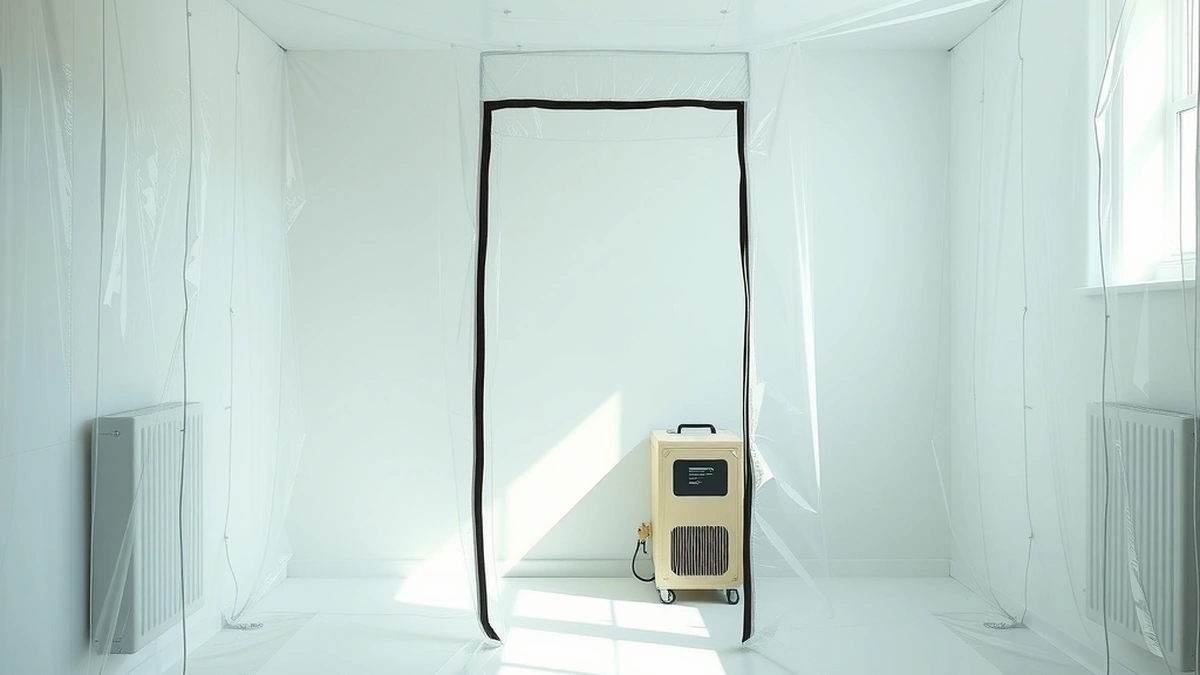
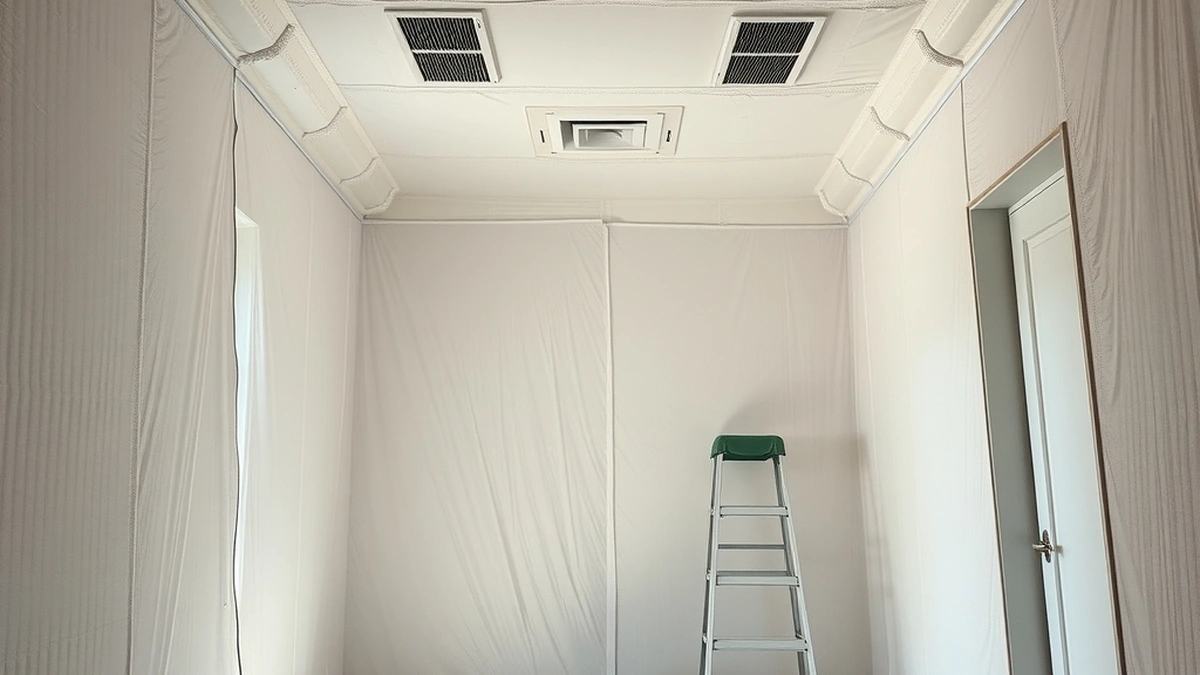
Containment is the physical barrier that keeps asbestos fibers inside the work area. Contractors typically seal off the area with polyethylene sheeting and tape, covering vents, doors, and openings. For friable material removal, a negative pressure enclosure is usually required. This means machines pull air out of the containment area so that air leaks inward rather than outward if the barrier is compromised.
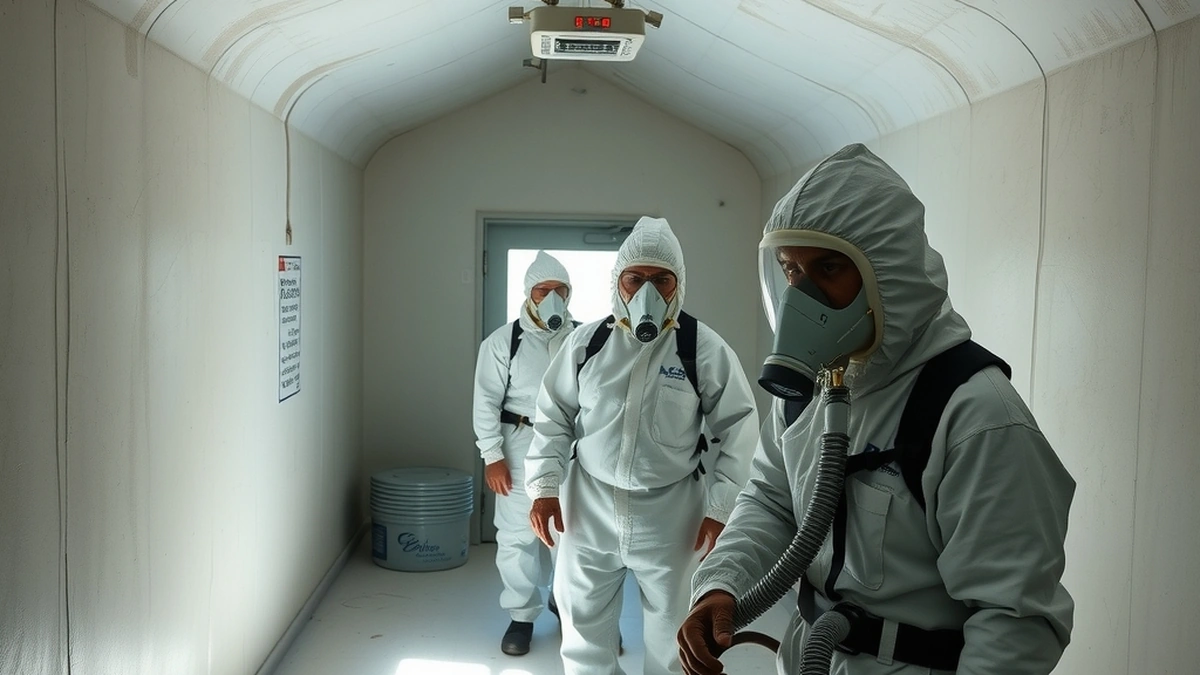
Workers enter through a decontamination chamber, often called a decon unit, where they put on disposable coveralls, respirators, and other personal protective equipment. After working, they pass through the decon to remove contaminated suits before exiting. This prevents fibers from being carried into clean areas of the building on clothing or tools.
4. Removal or Encapsulation
The abatement method depends on the material, its condition, and the building’s future use. Removal is the complete take-out of ACM, while encapsulation seals the material in place with a specialized coating or wrap to prevent fiber release.
Removal costs are commonly estimated at $20–$50 per square foot. Specific applications vary:
- Pipe insulation removal: $25–$75 per linear foot
- Floor tile removal: $10–$25 per square foot
- Encapsulation: $5–$15 per square foot
To show how these estimates work, consider a room with 200 square feet of asbestos floor tile. At $10–$25 per square foot, the removal cost estimate would be $2,000 to $5,000. If the same area used encapsulation at $5–$15 per square foot, the estimate would be $1,000 to $3,000. These figures exclude testing, surveys, containment setup, disposal fees, and clearance testing.
For a pipe insulation project, assume 40 linear feet of insulated pipe. At $25–$75 per linear foot, the removal estimate would be $1,000 to $3,000. Encapsulation, if permitted for that material, might cost less but would leave the material in place and require ongoing monitoring.
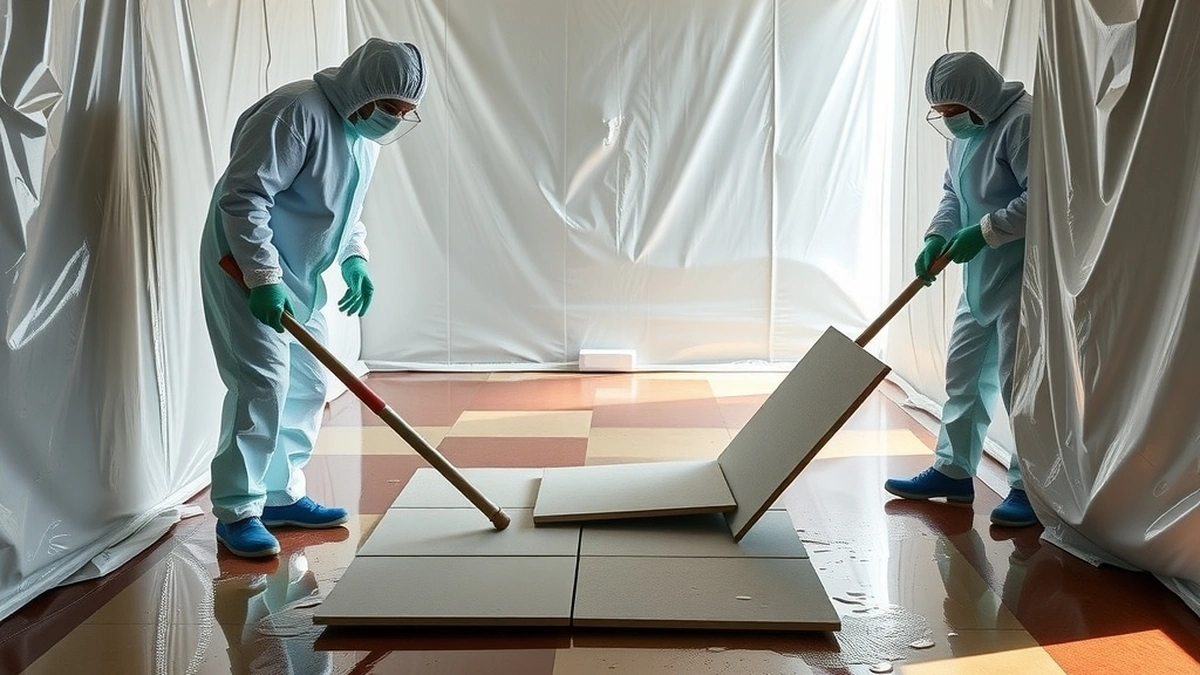
Wetted removal methods are often used to keep fibers from becoming airborne. Workers apply amended water to the material, carefully remove it, and place it in labeled, leak-tight containers. The waste is then transported to a licensed landfill approved to accept asbestos.
5. Decontamination and Waste Disposal
After removal, all surfaces inside the containment area are cleaned using HEPA vacuums and wet wiping. Tools, equipment, and the decontamination unit itself are cleaned before being moved out. Asbestos waste must be sealed in clearly labeled containers and disposed of at a facility authorized to accept it. Improper disposal can create environmental hazards and legal liability.
The contractor maintains a chain of custody for the waste, documenting where it was transported and how it was disposed. Property owners should request copies of disposal records for their files.
6. Clearance Testing and Reoccupation
Clearance testing is the final step before the containment barriers come down. An independent inspector—someone not employed by the abatement contractor—visually inspects the area and collects air samples to confirm that asbestos fiber levels are below the applicable clearance threshold. If the area passes, the containment can be removed and the space can be reoccupied.
If clearance testing fails, additional cleaning and abatement are required, followed by retesting. This step protects occupants and verifies that the abatement was completed according to plan.
7. Cost Factors and Budgeting
Total abatement cost depends on several variables beyond the per-square-foot rate. Accessibility matters: removing pipe insulation in a crawl space costs more than in an open mechanical room because of setup time and limited working height. Material condition matters too; damaged or deteriorated friable material requires more extensive containment and slower removal.
Here is a simplified budget example for a hypothetical 500-square-foot area with asbestos floor tile:
- Survey: $300–$800
- Bulk testing (5 samples at $50–$150 each): $250–$750
- Floor tile removal (500 sq ft at $10–$25): $5,000–$12,500
- Clearance testing: variable by region and scope
Total estimated range before disposal fees and permits: roughly $5,550–$14,050. Actual costs may be higher or lower.
For broader cost context, see our articles on how expensive is asbestos removal and how much does asbestos removal cost.
8. Working With Qualified Professionals
Asbestos abatement is not a general contracting task. Property owners should verify that a contractor holds the required state or local licenses, carries appropriate insurance, and follows EPA and OSHA work practices. Request references, a written work plan, and proof of worker training before signing a contract.
If the project involves repair or maintenance of asbestos-containing materials rather than full removal, different rules may apply. Our pages on asbestos removal repair and asbestos removal maintenance cover those scenarios in more detail.
The asbestos abatement process exists to protect workers, occupants, and the environment from airborne asbestos fibers. From initial testing through final clearance, each step is designed to contain the hazard and document that the work was done correctly. Property owners should treat abatement as a regulated professional service, not a renovation task to be handled without proper training and equipment.
Frequently asked questions
What is asbestos abatement?
Asbestos abatement is the controlled removal, encapsulation, or enclosure of asbestos-containing materials to reduce exposure risk, performed under containment by trained professionals.
Who can perform asbestos abatement?
Only licensed asbestos abatement contractors should perform abatement, especially for friable materials, because improper handling can release hazardous fibers.
How much does asbestos abatement cost?
Abatement generally ranges from $20 to $50 per square foot, depending on material type, location, accessibility, and whether removal or encapsulation is used.
Is encapsulation cheaper than removal?
Yes, encapsulation typically costs $5 to $15 per square foot, while full removal often runs $20 to $50 per square foot, though encapsulation is not appropriate for every material.
What happens after abatement is complete?
After abatement, the work area undergoes visual inspection and air clearance testing by an independent inspector before reoccupation is permitted.
Can I remove asbestos myself?
DIY removal of friable asbestos is strongly discouraged and may violate regulations; licensed contractors use containment, negative pressure, and proper disposal methods.
Sources
Some links are affiliate links.If you buy through them we may earn a commission at no extra cost to you. We do not accept payment for rankings. Read the full disclosure.