Disposal Cost: What Asbestos Waste Really Costs
What asbestos waste disposal costs, how landfill tipping fees and transport are charged, and what is already bundled into abatement pricing.
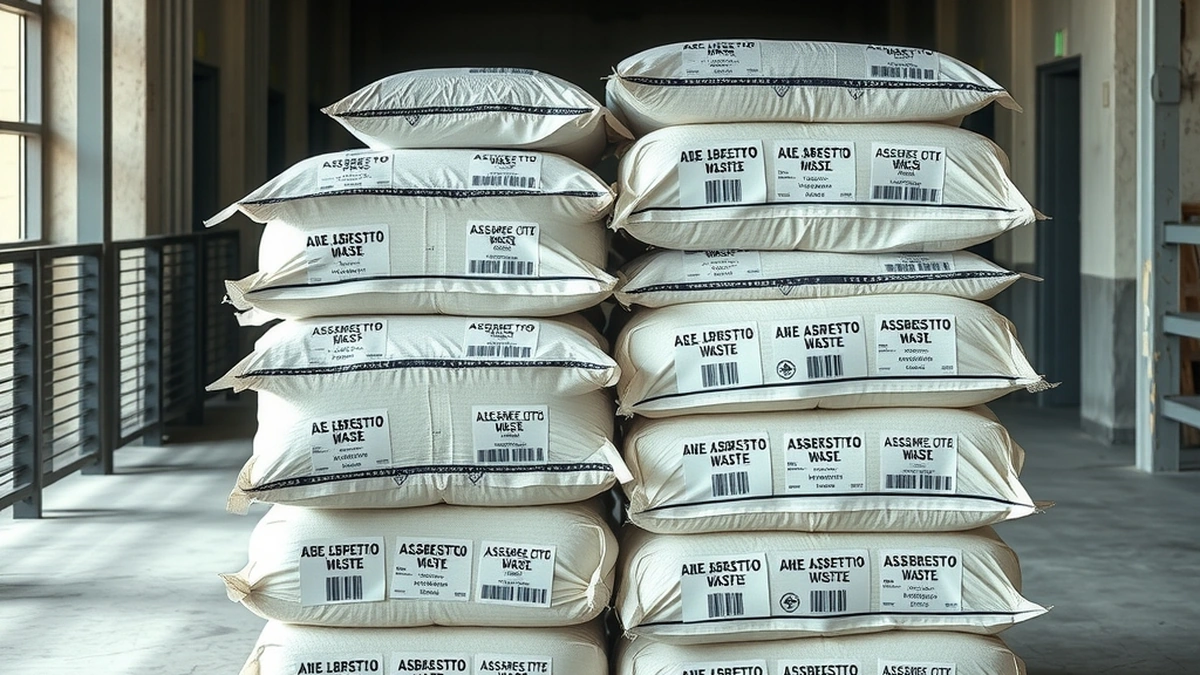
Asbestos disposal is usually bundled into abatement at $20 to $50 per square foot, but the real costs are tipping fees by weight, transport by distance and manifest handling. Standalone disposal of bagged waste often runs several hundred to a few thousand dollars.
- Bundled in abatement
- $20 - $50 per sq ft
- Tipping basis
- Charged by weight or volume
- Transport basis
- Distance and load size
- Paperwork
- Waste manifest per load
- Who may haul
- Licensed and permitted carriers
Some links on this page are affiliate links.If you buy through them we may earn a commission at no extra cost to you. We do not accept payment for rankings. Read the full disclosure.
Asbestos disposal cost is usually hidden inside the abatement price of $20 to $50 per square foot rather than quoted as its own line. The money actually goes to three places: landfill tipping fees, transport and the handling that produces a valid manifest. Standalone disposal of already-bagged waste commonly runs from several hundred to a few thousand dollars.
Asbestos disposal is the regulated packaging, transport and burial of asbestos-containing waste at a facility permitted to accept it, documented by a waste manifest. The material cannot go in a standard construction dumpster, and it cannot go to a transfer station that is not permitted for it.
What the Disposal Charge Covers
Four services sit behind the number. Packaging includes bags, drums, tape and labels. Transport includes the truck, the permitted carrier and the distance to the facility. Tipping is the landfill’s charge for accepting and burying the load. Administration is the manifest, the tracking and the record retention.
When a contractor quotes “disposal included,” all four are inside the rate. When a contractor quotes “disposal at cost,” only the first two are likely included and the rest appears later.
How Landfills Charge
Facilities price in one of three ways: per ton, per cubic yard, or per load with a minimum. The method matters because asbestos waste is heavy for its volume once it is wetted and bagged.
| Basis | How it is calculated | What it means for you |
|---|---|---|
| Per ton | Weight at the scale times the rate | Heavy material such as tile and cement siding costs more |
| Per cubic yard | Volume of the load times the rate | Bulky, light material such as insulation costs more |
| Minimum load | Flat charge up to a threshold | Small jobs pay a disproportionate share |
Because the bases differ, two landfills twenty miles apart can quote very different totals for the same load. A contractor who knows the local facilities will route the waste to the cheaper basis for the material type.
What the Abatement Rate Already Includes
General abatement at $20 to $50 per square foot covers containment, labor, packaging, transport and tipping. The disposal share varies with material, but on a typical interior job it is a minority of the total.
Floor tile removal at $10 to $25 per square foot carries a lower disposal share because the material is dense and stacks efficiently. Pipe insulation at $25 to $75 per linear foot carries a higher share because it is bulky and friable, so it needs more packaging per unit of hazard.
That is why comparing a tile job and a pipe job on price alone is misleading. The disposal component is structurally different.
Three Scenarios, Costed
These are estimates built on an assumed tipping fee of $150 per ton and an assumed haul of $400 per load. Both are illustrative, not quoted rates.
Scenario one: 250 square feet of floor tile. Removal at $15 per square foot is $3,750. Waste weight is roughly 1.5 tons, so tipping is 1.5 x $150 = $225. Haul is $400. Disposal share is $625, or about 17 percent of the removal price.
Scenario two: 80 linear feet of pipe insulation. Removal at $50 per linear foot is $4,000. Insulation is bulky, so the load fills a trailer: tipping at 2 tons is 2 x $150 = $300, haul is $400. Disposal share is $700.
Scenario three: 400 square feet of ceiling texture. Removal at $30 per square foot is $12,000. Debris plus bagging is around 3 tons: 3 x $150 = $450, plus two hauls at $400 = $800. Disposal share is $1,250.
Those percentages look small against the removal total, which is exactly why disposal disappears into the abatement rate. It also explains why long hauls and remote sites move the number: a 90-minute drive each way can double the transport line.
What Makes Disposal Expensive
Distance is the first driver. A permitted asbestos landfill may be the only one in a region, and the haul can be long.
Weight is the second. Cement siding, tile and contaminated soil are heavy, and heavy material pays by the ton.
Packaging standard is the third. Friable material needs double bagging or drumming, which adds material cost and labor time. A load that is not packaged to the facility’s standard can be rejected at the gate, and a rejected load is a second haul.
Finally, small loads pay minimum charges. A single bag from a repair job can cost as much to dispose of as a pallet, because the fixed costs dominate.
The Manifest Chain in Five Steps
- The contractor packages and labels the waste inside the containment.
- The load is weighed and the manifest is completed with the generator, carrier and destination.
- A permitted carrier transports it to a facility authorized to accept asbestos.
- The facility signs the manifest on receipt and buries the waste in a designated cell.
- The signed manifest returns to the property owner and is kept with the survey report.
Step five is the one to insist on. The signed manifest is your proof that the material reached a permitted site, and it is the document a buyer or regulator will ask for.
Cutting Cost Without Cutting Compliance
The legitimate savings are in volume and segregation. Remove only material that tested positive. Keep non-asbestos demolition debris out of the asbestos waste stream, because putting clean debris in an asbestos bag multiplies its disposal cost. Do not over-bag, but do not under-bag either.
The illegitimate savings are the ones that create liability: an unpermitted dumpster, a load described as general debris, or a carrier without the right permit. Those shortcuts are the reason disposal is regulated, and the fine follows the waste.
For the full project view, read asbestos removal cost and abatement cost. For what the underlying service should look like, see asbestos disposal cost and our guide to vetting disposal reviews. For how disposal compares with leaving material in place, disposal vs abatement sets out the difference. Handling the bags yourself is not a saving; it is an unpermitted transport.
Frequently asked questions
How much does asbestos disposal cost?
Disposal is normally inside the abatement rate of $20 to $50 per square foot. Standalone disposal of already-bagged waste typically runs several hundred to a few thousand dollars depending on weight and haul distance.
Are landfill tipping fees charged by weight or volume?
Both exist. Some facilities charge per ton, others per cubic yard, and many set a minimum load, so the same waste can price differently at two sites.
Does the abatement quote include disposal?
It should, but confirm in writing. Some quotes list disposal as billed at cost, which means the number you compare is incomplete.
Can I take asbestos waste to the landfill myself?
Generally no. Transport is regulated, the receiving facility must be permitted to accept asbestos, and most landfills require a licensed carrier and a completed manifest.
Why is disposal more expensive than ordinary construction waste?
Because the material must be wetted, sealed, labeled, tracked on a manifest and buried in a designated cell, and only permitted facilities can accept it.
How can I reduce disposal cost?
Reduce volume honestly. Removing only the material that tests positive, keeping non-asbestos debris separate and avoiding over-bagging cuts weight without cutting compliance.
Sources
Some links are affiliate links.If you buy through them we may earn a commission at no extra cost to you. We do not accept payment for rankings. Read the full disclosure.