Wet Removal Installation for Asbestos Abatement
Learn how wet removal installation works in asbestos abatement, including containment, safety, and cost factors.

Wet removal installation is a regulated asbestos abatement method where wetted materials are removed under containment to limit airborne fiber release.
- Method
- Wet removal under containment
- Best for
- Friable and non-friable asbestos materials
- Key control
- Water mist plus negative pressure
- Worker requirement
- Licensed abatement contractor
Some links on this page are affiliate links.If you buy through them we may earn a commission at no extra cost to you. We do not accept payment for rankings. Read the full disclosure.
Wet removal installation is a regulated asbestos abatement method in which asbestos-containing material is kept continuously wet during removal to suppress dust and limit airborne fiber release. The process uses water mist or amended water, sealed containment, negative pressure, and HEPA filtration to protect workers and building occupants. Because friable asbestos can release fibers when disturbed, wet removal should only be performed by licensed abatement professionals.
How Wet Removal Installation Works
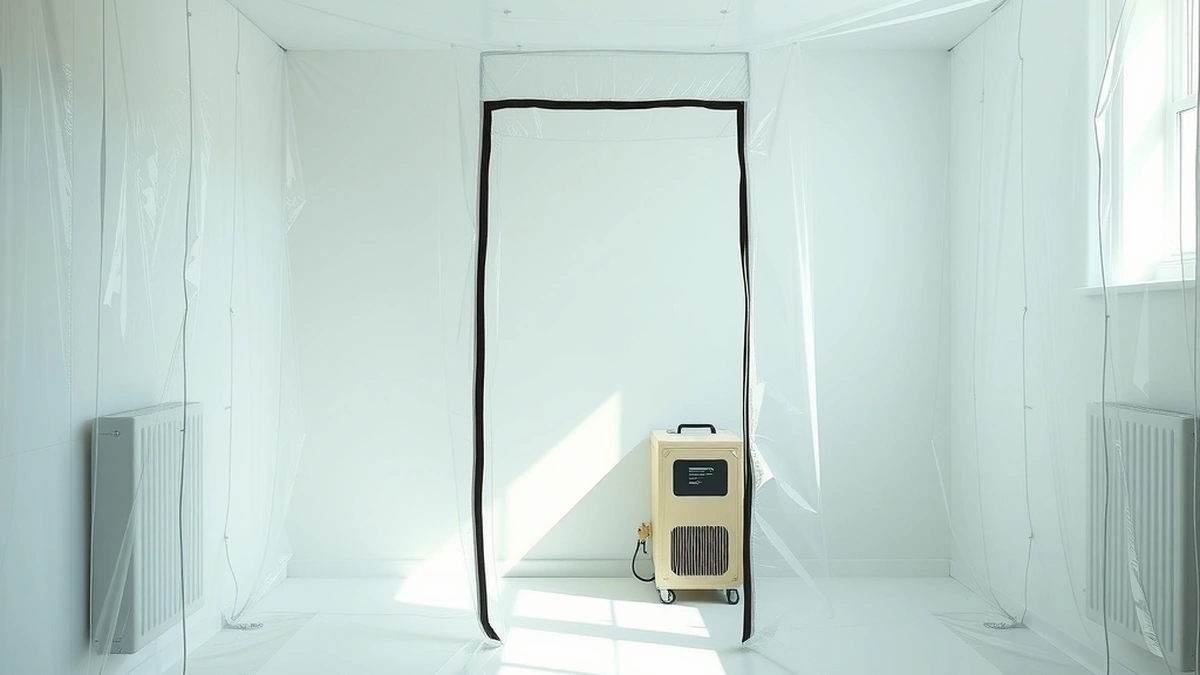
Wet removal installation follows a controlled sequence designed to keep asbestos fibers from becoming airborne. First, the work area is isolated with polyethylene sheeting and sealed with tape to create a containment barrier. Negative pressure is established inside the containment using HEPA-filtered air scrubbers, so air flows inward rather than leaking out to adjacent rooms.
Before removal begins, the asbestos-containing material is saturated with water or an amended water solution containing a surfactant. Wetting increases the weight of fibers and causes them to settle, reducing the chance that they will become airborne when the material is disturbed. Workers then carefully remove the saturated material using hand tools or low-impact mechanical methods, placing it directly into labeled, leak-tight disposal bags.
After removal, all surfaces within the containment are wet-wiped and HEPA-vacuumed. The area remains under negative pressure until visual inspection and clearance testing confirm that asbestos fiber levels are below applicable regulatory thresholds. Only then is the containment dismantled and the space released for reoccupation.
Where Wet Removal Is Typically Used
Wet removal installation is commonly applied to friable asbestos materials, which can be crumbled by hand pressure and release fibers more easily. Typical applications include:
- Sprayed-on fireproofing on structural beams and decks
- Thermal insulation on pipes, boilers, and tanks
- Acoustic ceiling plaster and decorative textures
- Asbestos-containing pipe lagging and joint compound
- Duct insulation and flexible duct connectors
Non-friable materials such as vinyl floor tiles may also be removed wet when they are damaged or likely to become friable during demolition. The decision to use wet removal depends on material condition, location, and applicable federal, state, and local regulations.
Containment and Safety Controls
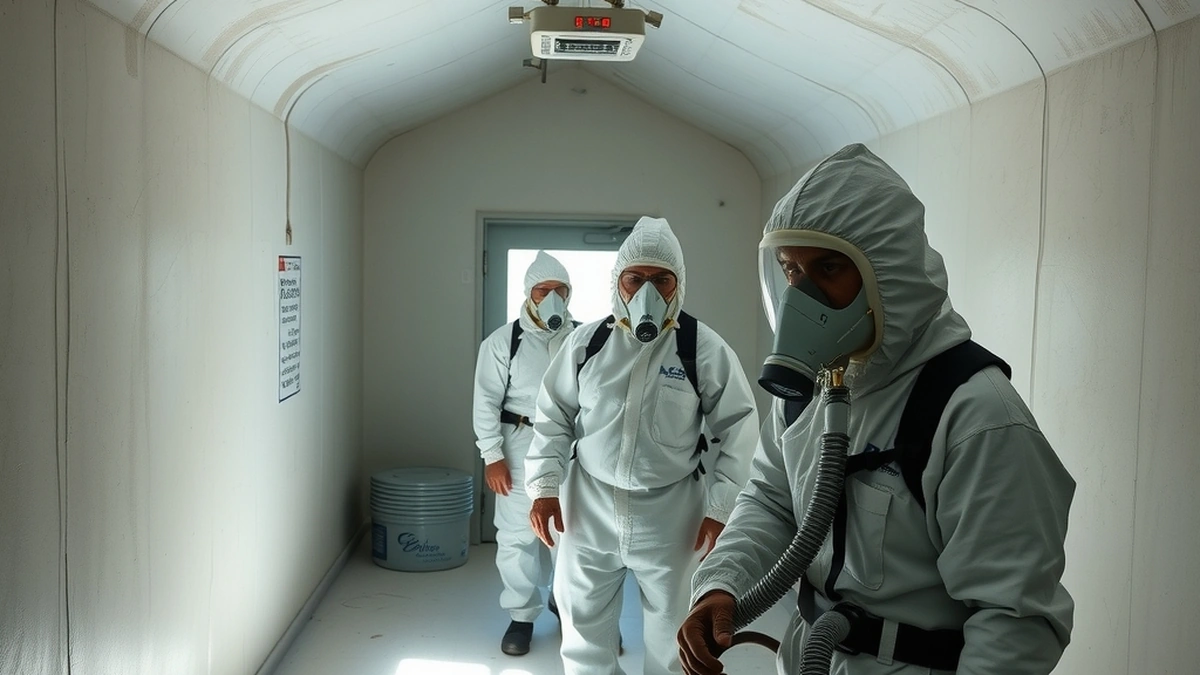
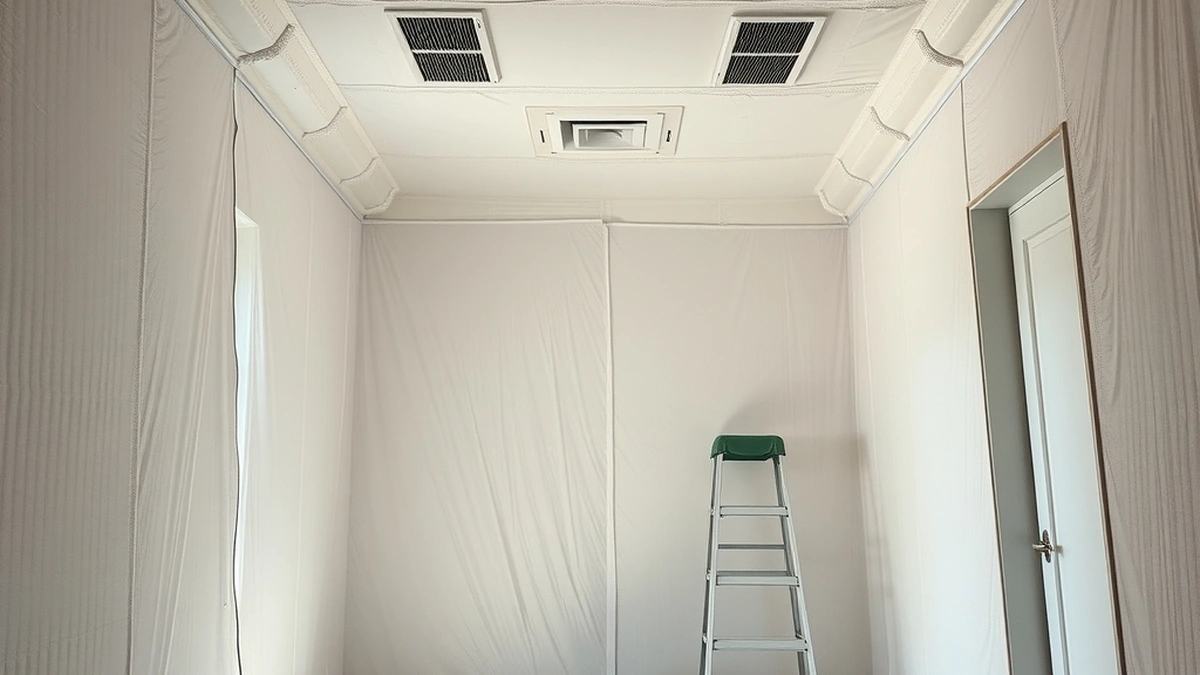
Containment is the physical boundary that separates the asbestos work area from the rest of the building. It typically consists of two layers of 6-mil polyethylene sheeting on walls, floors, and openings, sealed with duct tape and adhesive spray. Entry occurs through a decontamination chamber where workers put on and remove personal protective equipment.
Negative pressure is maintained by exhausting air from the containment through HEPA filtration units. The exhaust creates a pressure differential so that any leaks draw clean air into the containment rather than pushing contaminated air out. Airflow is often monitored with manometers or smoke tubes to verify directionality.
Worker protection includes disposable coveralls, respirators with HEPA cartridges, gloves, and boot covers. Workers pass through decontamination procedures before leaving the work area to prevent carrying fibers on clothing or equipment. Waste is containerized, labeled, and transported to an approved asbestos disposal facility.
Cost Estimates for Wet Removal Installation
Costs for asbestos abatement vary widely based on material type, square footage, accessibility, and regional labor rates. The figures below are estimates and should be confirmed with a licensed contractor after an on-site inspection.
| Service | Estimated Cost |
|---|---|
| Bulk asbestos testing | $50–$150 per sample |
| Asbestos survey | $300–$800 |
| General abatement | $20–$50 per sq ft |
| Pipe insulation removal | $25–$75 per linear ft |
| Floor tile removal | $10–$25 per sq ft |
| Encapsulation | $5–$15 per sq ft |
To illustrate how estimates are calculated, consider a room with 400 square feet of asbestos-containing ceiling material requiring wet removal. At a general abatement rate of $20 to $50 per square foot, the removal cost would be:
- Low estimate: 400 sq ft × $20 = $8,000
- High estimate: 400 sq ft × $50 = $20,000
If the same project includes 50 linear feet of pipe insulation at $25 to $75 per linear foot, the pipe removal adds:
- Low estimate: 50 linear ft × $25 = $1,250
- High estimate: 50 linear ft × $75 = $3,750
Combined low-end estimate: $8,000 + $1,250 = $9,250. Combined high-end estimate: $20,000 + $3,750 = $23,750. These figures exclude testing, surveys, clearance sampling, and disposal fees, which are priced separately.
Wet Removal vs. Encapsulation
Wet removal installation physically removes asbestos-containing material from the building. Encapsulation, by contrast, applies a sealant or binding agent over the material to lock fibers in place without removal. Encapsulation costs roughly $5 to $15 per square foot and may be appropriate when material is in good condition and removal would create greater risk.
Wet removal is generally preferred when the material is damaged, when renovation or demolition will disturb it, or when building owners want permanent elimination of the asbestos source. Encapsulation leaves the material in place, which means future work may still require abatement. A licensed inspector can help determine which method suits a specific building and material condition.
Testing and Clearance Requirements
Before wet removal begins, bulk sampling identifies whether asbestos is present and at what concentration. Bulk testing typically costs $50 to $150 per sample, while a full asbestos survey may range from $300 to $800 depending on building size and sample count. Survey results inform the abatement plan, worker protection level, and waste handling procedures.
After removal is complete, clearance testing verifies that the work area is safe for reoccupation. This usually involves visual inspection plus air sampling analyzed by phase contrast microscopy (PCM) or transmission electron microscopy (TEM). Clearance criteria vary by jurisdiction and material type, but the area cannot be released until results meet applicable standards.
Testing and clearance are separate from removal costs and should be budgeted accordingly. Property owners should retain copies of survey reports, abatement plans, waste manifests, and clearance results for their records.
Hiring a Qualified Abatement Contractor
Wet removal installation is not a task for general renovation crews or unlicensed individuals. Asbestos abatement contractors should hold appropriate state or local licenses, carry insurance, and follow EPA and OSHA requirements for worker protection, containment, and waste disposal.
When evaluating contractors, ask about their experience with wet removal, their containment procedures, and whether they provide clearance documentation. A reputable contractor will provide a written scope of work, cost estimate, and timeline before starting. For more background on abatement pricing and methods, see our overview of asbestos removal installation and our guide to asbestos removal cost per square foot.
Property owners should also understand how abatement differs from testing. Testing identifies the presence and condition of asbestos, while abatement addresses the hazard through removal, encapsulation, or enclosure. Our comparison of asbestos removal vs asbestos testing explains the distinction in more detail.
Because improper removal can increase exposure risks, DIY asbestos removal is strongly discouraged, especially for friable materials. Licensed professionals have the training, equipment, and licensing to perform wet removal installation safely and in compliance with applicable regulations.
For ongoing building care after abatement, routine inspection of remaining asbestos-containing materials helps detect damage before fibers are released. Our asbestos removal maintenance guide covers monitoring and re-inspection practices. If you are comparing service providers, our best asbestos removal resource outlines what to look for in a qualified abatement team.
Next, compare how much does asbestos removal cost, asbestos removal installation, asbestos removal repair before you commit.
Frequently asked questions
What is wet removal installation?
Wet removal installation is an abatement technique where asbestos-containing material is kept wet during removal to suppress dust and airborne fibers.
Is wet removal required by law?
Federal and state rules often require wet methods for friable asbestos, but exact requirements depend on material type and location.
Can building occupants stay during wet removal?
Occupants must typically be relocated from the work area and adjacent spaces until clearance testing confirms the area is safe.
How much does asbestos abatement cost?
Abatement generally ranges from $20 to $50 per square foot, depending on material, location, and containment complexity.
Is wet removal the same as encapsulation?
No. Wet removal removes the material; encapsulation seals it in place and typically costs $5 to $15 per square foot.
Who should perform wet removal installation?
Only licensed asbestos abatement professionals should perform wet removal; DIY removal of friable material is not recommended.
Sources
Some links are affiliate links.If you buy through them we may earn a commission at no extra cost to you. We do not accept payment for rankings. Read the full disclosure.