Floor Tiles and Mastic: Repair Options
Repair options for asbestos floor tiles and mastic, including encapsulation, removal, and cost estimates.
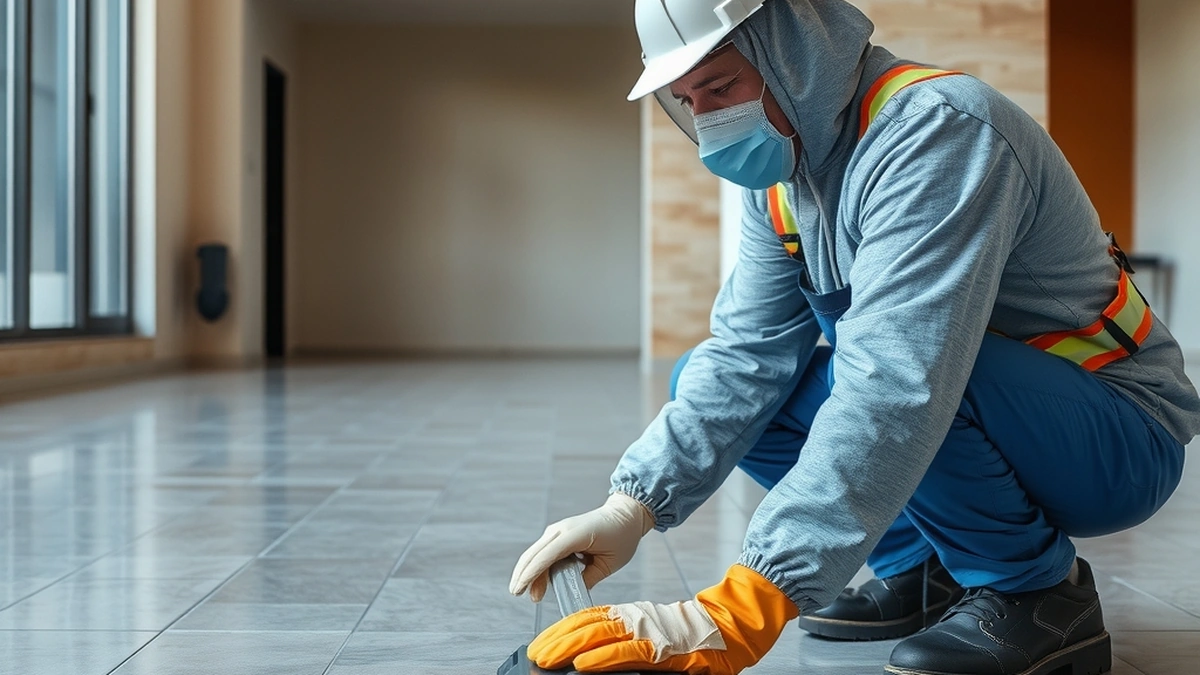
Intact asbestos floor tiles and mastic can often be encapsulated or covered; damaged or friable material requires professional abatement.
- Bulk testing
- $50–$150 per sample
- Asbestos survey
- $300–$800
- Encapsulation
- $5–$15 per sq ft
- Floor tile removal
- $10–$25 per sq ft
- Full abatement
- $20–$50 per sq ft
Some links on this page are affiliate links.If you buy through them we may earn a commission at no extra cost to you. We do not accept payment for rankings. Read the full disclosure.
Floor tiles and mastic installed before the 1980s frequently contain asbestos, and property owners face a limited set of repair paths once the material is identified. The safest option depends on whether the tiles are intact or damaged, whether the mastic is friable, and what the space will be used for next. This guide explains the repair options, how estimates are calculated, and when professional abatement is required.
Understand What You Are Working With
Vinyl asbestos floor tiles and the mastic used to glue them down were common in residential and commercial buildings through much of the 20th century. Intact tiles that are firmly bonded are generally considered non-friable, meaning they do not release fibers easily under normal conditions. Mastic, especially black cutback adhesive, can become friable as it ages or when it is disturbed during removal.
Before choosing any repair option, a qualified inspector should collect samples for bulk testing. Bulk testing costs $50–$150 per sample, and a full asbestos survey typically runs $300–$800 depending on the size of the property and the number of areas sampled. These results determine whether the material is asbestos-containing and whether it is friable, which drives every repair decision that follows.
Option One: Leave Intact Material in Place
If asbestos floor tiles and mastic are in good condition and not disturbed, leaving them in place is often the lowest-risk approach. The material does not need to be removed simply because it contains asbestos. Routine cleaning and avoiding abrasive maintenance can keep fibers from becoming airborne.
This option carries no direct abatement cost, but it does impose long-term obligations. Any future renovation, flooring replacement, or demolition must account for the asbestos. Property owners should keep records of the survey and inspection results so contractors can plan accordingly. This is not a permanent fix if the building will be remodeled, but it is a valid management strategy for stable, undisturbed floors.
Option Two: Encapsulation
Encapsulation involves applying a sealant or specialized coating over asbestos floor tiles to bind fibers and prevent release. It is appropriate when tiles are intact but the owner wants to reduce the risk of future damage. Encapsulation costs roughly $5–$15 per sq ft. For a 200-square-foot room, the estimate is:
200 sq ft × $5 = $1,000
200 sq ft × $15 = $3,000
Encapsulation does not remove the asbestos. It covers it. Future work that penetrates the encapsulated surface, such as installing new subflooring or plumbing, can still disturb the material and require abatement. Encapsulation is also unsuitable if the tiles are already loose, cracked, or if the mastic is crumbling.
Option Three: Covering with New Flooring
Installing new flooring directly over intact asbestos tiles is sometimes permitted, depending on local building codes and the condition of the existing surface. The new layer acts as a physical barrier. Common coverings include new vinyl, laminate, or tile, provided the substrate is stable and the added height does not create transitions or door clearance problems.
Costs vary widely by flooring type and labor, but this approach avoids the $10–$25 per sq ft floor tile removal expense. However, covering asbestos material does not eliminate it. The asbestos remains beneath the new floor and must be disclosed during sale or disclosed to any contractor who later cuts into the floor. Covering damaged or loose tiles is not acceptable; the damaged material must be addressed first.
Option Four: Professional Removal
When floor tiles are broken, loose, or water-damaged, or when mastic is friable, removal by a licensed asbestos abatement contractor is typically required. Floor tile removal is estimated at $10–$25 per sq ft. For a 300-square-foot area:
300 sq ft × $10 = $3,000
300 sq ft × $25 = $7,500
Full abatement, which includes containment, negative air pressure, decontamination, and disposal, runs $20–$50 per sq ft. For the same 300-square-foot space:
300 sq ft × $20 = $6,000
300 sq ft × $50 = $15,000
Removal is the only option that permanently eliminates the asbestos from the floor. It is also the most disruptive and expensive. Property owners should not attempt removal themselves, particularly for friable mastic. DIY disturbance of asbestos material can contaminate the entire building and create liability.
Option Five: Repair of Localized Damage
Small areas of damage, such as a few cracked tiles, may be candidates for targeted repair rather than whole-room abatement. A licensed contractor can remove and replace the damaged section using containment procedures appropriate for the square footage involved. Because even small removals require proper waste disposal and worker protection, the per-square-foot cost can be higher than a full-room job due to mobilization and setup.
Localized repair is not a substitute for abatement when damage is widespread. If more than a small portion of the floor is affected, or if the mastic beneath is deteriorating, full removal or encapsulation is usually the more practical and code-compliant path.
Cost Comparison at a Glance
The table below shows estimated cost ranges for common scenarios. These are estimates; actual pricing depends on location, accessibility, material condition, and disposal fees.
| Option | Estimated Cost | Best For |
|---|---|---|
| Bulk testing | $50–$150 per sample | Confirming asbestos content |
| Asbestos survey | $300–$800 | Assessing scope and friability |
| Encapsulation | $5–$15 per sq ft | Intact tiles needing fiber binding |
| Floor tile removal | $10–$25 per sq ft | Damaged or loose tiles |
| Full abatement | $20–$50 per sq ft | Friable mastic or full remediation |
For example, a 400-square-foot basement with intact but aging asbestos tiles might cost $2,000–$6,000 to encapsulate, compared with $4,000–$10,000 for removal and $8,000–$20,000 for full abatement. Testing and survey fees are additional.
Choosing the Right Path
Start with testing. Without laboratory confirmation, no repair option can be selected responsibly. If the tiles are intact and the mastic is stable, encapsulation or covering may be sufficient. If the material is damaged, friable, or scheduled for demolition, professional removal is the standard answer.
Property owners can review cost context at /asbestos-removal-cost-per-square-foot/, compare repair versus replacement approaches at /asbestos-removal-repair/, and understand how testing fits into the process at /asbestos-removal-vs-asbestos-testing/. All work involving damaged or friable asbestos floor tiles and mastic should be performed by licensed professionals following EPA and OSHA requirements.
Next, compare how much does asbestos removal cost, asbestos removal installation, asbestos removal repair before you commit.
Frequently asked questions
Are old floor tiles and mastic always asbestos?
Not always, but many vinyl tiles and black mastic installed before the 1980s contain asbestos. Only laboratory bulk testing can confirm it.
Can I sand or scrape asbestos floor tiles myself?
No. Sanding, scraping, or breaking friable asbestos material releases fibers and should only be handled by a licensed abatement contractor.
Is encapsulation cheaper than removal?
Yes. Encapsulation runs about $5–$15 per sq ft, while floor tile removal is typically $10–$25 per sq ft.
Can new flooring go over intact asbestos tiles?
Often yes, if the tiles are firmly bonded and in good condition, but a professional should verify the substrate and local code requirements first.
What makes mastic more dangerous than tiles?
Mastic can become friable when it deteriorates, and removing it often disturbs more material than lifting intact tiles alone.
How do I know if my floor tiles need abatement?
A certified inspector collects samples for bulk testing ($50–$150 per sample) and issues a survey report ($300–$800) that determines the needed action.
Sources
Some links are affiliate links.If you buy through them we may earn a commission at no extra cost to you. We do not accept payment for rankings. Read the full disclosure.