Common Asbestos Abatement Problems Explained
Learn about common asbestos abatement problems, cost factors, and how licensed professionals handle containment and removal safely.
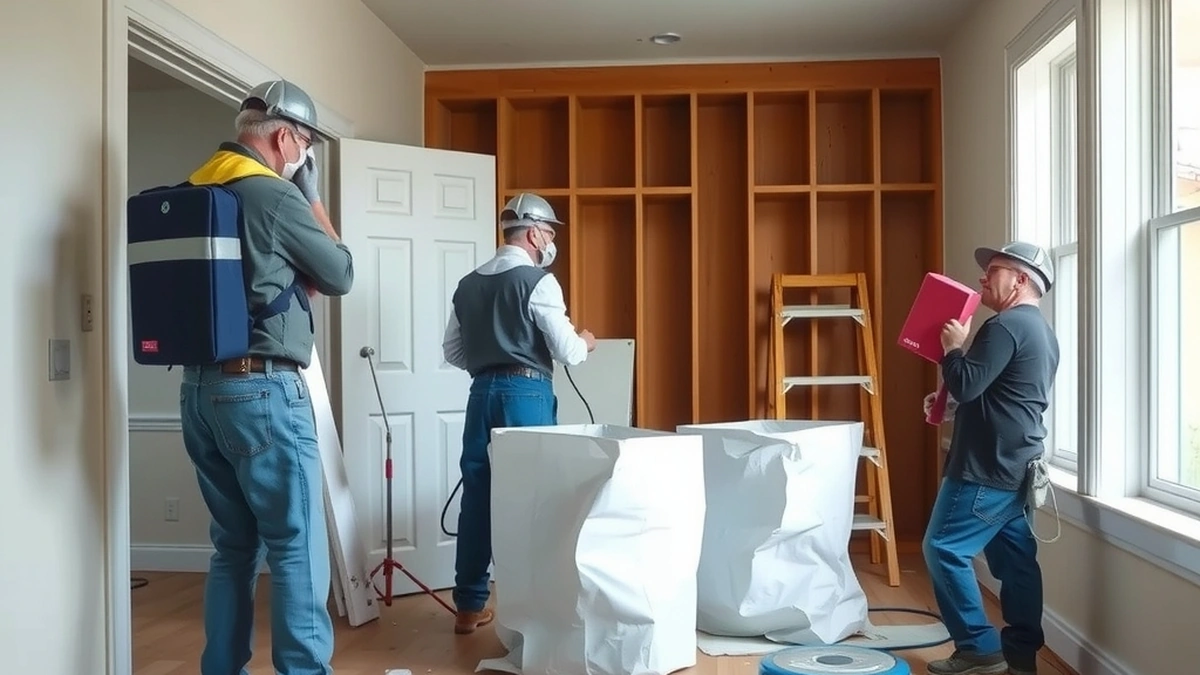
Abatement problems include containment failures, improper removal, and cost overruns. Licensed contractors use negative pressure, HEPA filtration, and clearance testing to resolve them safely.
- Typical abatement cost
- $20–$50 per sq ft
- Bulk testing
- $50–$150 per sample
- Survey cost
- $300–$800
- Pipe insulation removal
- $25–$75 per linear ft
- Floor tile removal
- $10–$25 per sq ft
Some links on this page are affiliate links.If you buy through them we may earn a commission at no extra cost to you. We do not accept payment for rankings. Read the full disclosure.
Asbestos abatement problems usually fall into three categories: containment failures, improper removal techniques, and unexpected cost overruns. When asbestos-containing material is disturbed without proper controls, fibers can become airborne and spread through a building. Licensed abatement contractors address these problems with sealed work areas, negative-pressure equipment, and post-removal clearance testing.
Common Abatement Problems
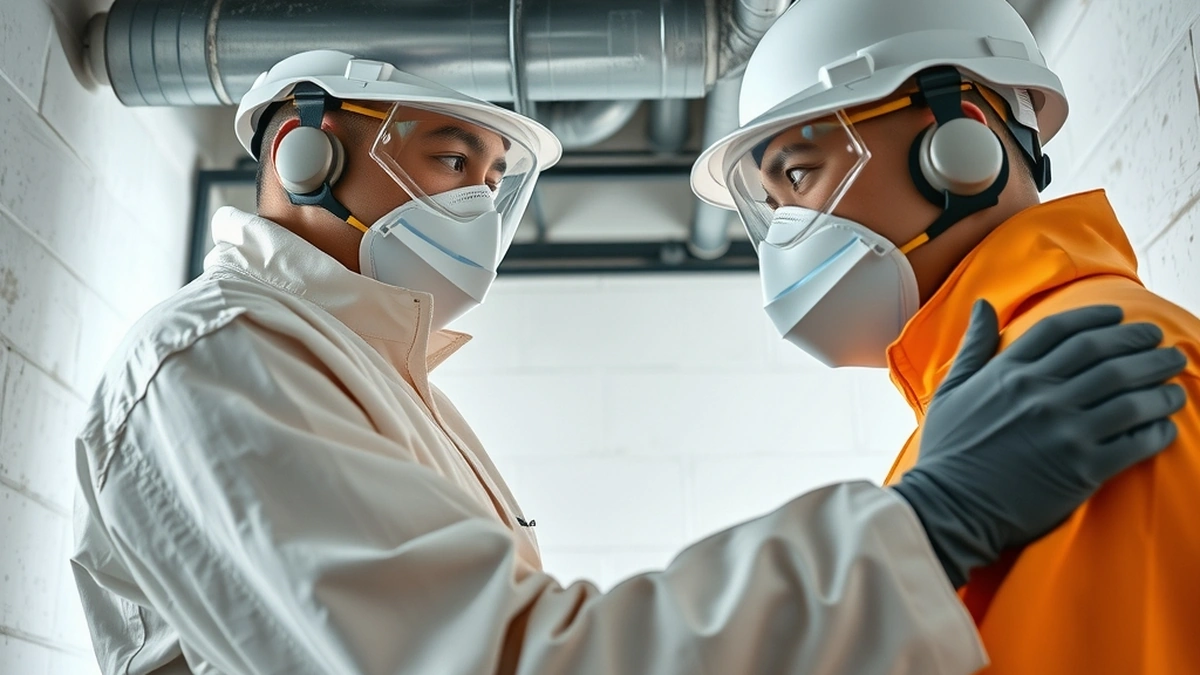
The most frequent abatement problems include breached containment, inadequate worker decontamination, and skipped air monitoring. Containment failure happens when plastic sheeting tears, tape seals fail, or HVAC systems are not shut down and sealed. Negative-pressure units must run continuously to keep fibers inside the work area. If the pressure differential drops, contaminated air can migrate into adjacent rooms.
Improper removal often involves dry scraping or breaking material instead of keeping it wet. Wet methods reduce fiber release, but some contractors skip this step to save time. Another problem is improper waste handling. Asbestos waste must be double-bagged in labeled, leak-tight containers and disposed of at an approved facility. Illegal disposal creates liability for the property owner and endangers waste workers.
Cost surprises also rank among common abatement problems. A project quoted at $20–$50 per square foot can rise if additional material is discovered during demolition. For example, removing 500 square feet of floor tile at $10–$25 per square foot estimates $5,000 to $12,500. If the contractor finds underlying mastic or pipe insulation, the price changes. Pipe insulation removal runs $25–$75 per linear foot, so 20 linear feet adds $500 to $1,500. Bulk testing at $50–$150 per sample and a survey at $300–$800 are separate upfront costs that should appear in a written estimate.
Testing and Survey Costs Before Abatement
Before abatement begins, a licensed inspector should identify where asbestos is present. Bulk sampling costs $50–$150 per sample. If an inspector collects ten samples, laboratory fees total $500 to $1,500. A full asbestos survey typically costs $300–$800, depending on building size and the number of suspect materials. These figures are estimates; actual prices vary by region and laboratory turnaround time.
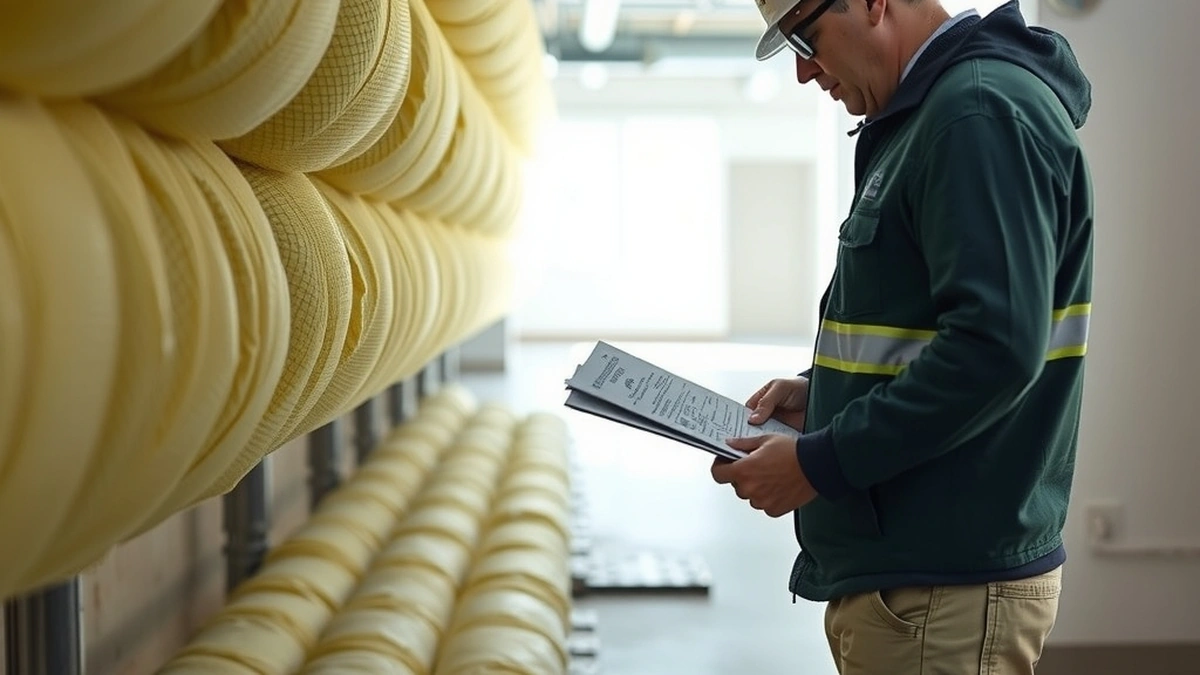
Testing matters because not all suspect material contains asbestos. Floor tile, pipe insulation, and textured coatings may look similar, but only laboratory analysis confirms the fiber content. Knowing exactly what is present prevents unnecessary abatement and focuses the budget on regulated material. For more on how testing fits into the overall process, see our guide on asbestos removal vs asbestos testing.
Containment and Negative Pressure
Containment is the first line of defense against abatement problems. Contractors seal the work area with polyethylene sheeting and tape, covering vents, doors, and openings. A negative-pressure air filtration device pulls air through HEPA filters and exhausts it outside, maintaining lower pressure inside the containment than outside. This prevents fibers from escaping when the containment is entered or exited.
If negative pressure fails, work should stop. A smoke test or manometer reading verifies the pressure differential. Workers entering and exiting must pass through a decontamination chamber, where they remove disposable coveralls and HEPA-vacuum their clothing. Skipping decontamination is a common problem that carries fibers into clean areas on shoes and tools.
Removal Methods and Cost Factors
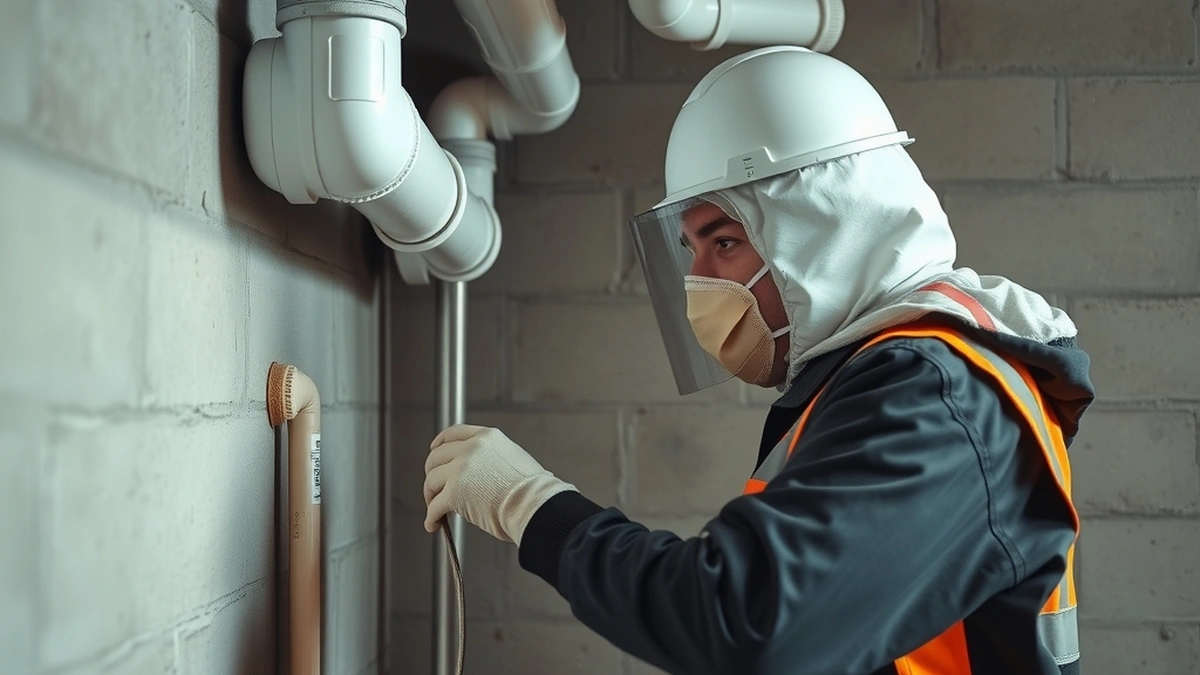
Abatement cost depends heavily on the material type and removal method. Floor tile removal costs $10–$25 per square foot. Removing 300 square feet therefore estimates $3,000 to $7,500. Pipe insulation removal costs $25–$75 per linear foot, so 40 linear feet estimates $1,000 to $3,000. Encapsulation, which seals material in place rather than removing it, costs $5–$15 per square foot and may be appropriate when removal would cause more damage than leaving the material undisturbed.
These figures are estimates. Accessibility, building height, and disposal fees all influence the final price. A second-story pipe run costs more than a basement run because of scaffolding and transport time. Property owners should request itemized quotes that separate testing, containment, removal, disposal, and clearance testing. For a broader cost overview, see our page on asbestos removal cost per square foot.
Clearance Testing and Re-Occupancy
After removal, the work area must pass clearance testing before occupants return. A licensed inspector performs a visual inspection and collects air samples to confirm fiber concentrations are below the applicable re-occupancy threshold. If the area fails, additional cleaning and HEPA vacuuming are required, followed by retesting.
Clearance testing is not optional for regulated abatement projects. It provides documented evidence that the containment worked and the area is safe for normal use. Without it, property owners have no objective proof that abatement problems were resolved. Some contractors include clearance testing in their contract; others bill it separately. Either way, it should be scheduled before the project is considered complete.
Encapsulation as an Alternative
Encapsulation applies a penetrating or bridging sealant over asbestos-containing material, locking fibers in place. At $5–$15 per square foot, it often costs less than removal. For 400 square feet, encapsulation estimates $2,000 to $6,000, compared with $8,000 to $20,000 for removal at $20–$50 per square foot.
Encapsulation is not suitable for every situation. Material that is already damaged, friable, or located in a high-traffic area may still require removal. Encapsulated material must be inspected periodically, and any future renovation must account for the sealed asbestos. Property owners should weigh long-term management responsibilities against the lower upfront cost. For related guidance, see our article on asbestos removal installation.
Hiring a Qualified Abatement Contractor
Many abatement problems stem from hiring unqualified contractors. A legitimate abatement firm holds state or local licensing, carries liability and workers’ compensation insurance, and follows EPA and OSHA work-practice standards. Ask for proof of licensing, request references, and confirm that the contract includes waste disposal and clearance testing.
Avoid contractors who suggest dry removal, refuse to provide written estimates, or encourage homeowners to handle friable material themselves. DIY asbestos removal is strongly discouraged for friable material because the risk of fiber release is high and regulatory violations can carry fines. For more on why professional oversight matters, see our article on DIY asbestos removal.
Planning and Budgeting for Abatement
Start with a survey and bulk sampling to define the scope. Budget $300–$800 for a survey and $50–$150 per sample for laboratory analysis. Then obtain at least two itemized abatement quotes. Use the standard ranges as benchmarks: $20–$50 per square foot for general abatement, $10–$25 per square foot for floor tile, $25–$75 per linear foot for pipe insulation, and $5–$15 per square foot for encapsulation.
Add a contingency of 10–20 percent for hidden material or access difficulties. If a 1,000-square-foot project is quoted at $30 per square foot, the base estimate is $30,000. A 15 percent contingency adds $4,500, bringing the planning budget to $34,500. These figures are estimates and do not include potential disposal surcharges or third-party clearance testing fees.
Maintenance After Abatement
Once abatement is complete and clearance testing passes, the immediate hazard is controlled. However, buildings with remaining asbestos-containing material elsewhere require an operations and maintenance plan. Periodic inspections check for damage, water intrusion, or deterioration that could release fibers. Maintenance staff should be trained to recognize suspect material and avoid disturbing it during routine repairs.
For ongoing guidance, see our article on asbestos removal maintenance. If you need help evaluating removal options, our best asbestos removal overview compares approaches by material type and building condition. And for installation-related abatement work, our asbestos removal installation page covers project setup and containment planning.
Addressing abatement problems early protects occupants, preserves property value, and keeps projects compliant with federal and state regulations. Testing, containment, licensed labor, and clearance testing form the core of a safe asbestos abatement project.
Next, compare how much does asbestos removal cost, asbestos removal installation, asbestos removal repair before you commit.
Frequently asked questions
What are common asbestos abatement problems?
Containment breaches, inadequate decontamination, and missing clearance testing can expose workers and occupants to airborne fibers.
How much does asbestos abatement cost?
Professional abatement typically runs $20–$50 per square foot, depending on material, location, and accessibility.
Can I remove friable asbestos myself?
No. Friable asbestos should only be handled by licensed abatement professionals using containment and negative pressure equipment.
What is encapsulation?
Encapsulation seals asbestos-containing material with a protective coating and generally costs $5–$15 per square foot.
When is clearance testing required?
Clearance testing is required after abatement to confirm the work area meets re-occupancy standards before containment is removed.
How do I verify an asbestos contractor?
Check state licensing, request proof of insurance, and confirm the contractor follows EPA and OSHA work-practice standards.
Sources
Some links are affiliate links.If you buy through them we may earn a commission at no extra cost to you. We do not accept payment for rankings. Read the full disclosure.