Asbestos Enclosure Problems: What to Know
Learn about common asbestos enclosure problems, signs of failure, and when to call a licensed abatement professional.
Enclosure problems occur when asbestos containment barriers leak, tear, or lose negative pressure, risking fiber release outside the work area.
- Issue
- Containment breach or negative pressure loss
- Risk
- Airborne asbestos fibers outside work area
- Fix
- Licensed abatement contractor inspection and repair
- Cost
- Abatement estimates $20–$50 per sq ft
Some links on this page are affiliate links.If you buy through them we may earn a commission at no extra cost to you. We do not accept payment for rankings. Read the full disclosure.
Asbestos enclosure problems happen when containment barriers around asbestos-containing material lose integrity. A breach in sheeting, a failed seal, or a drop in negative pressure can allow fibers to move beyond the work area. These issues require prompt assessment by a licensed abatement professional.
What an Asbestos Enclosure Is
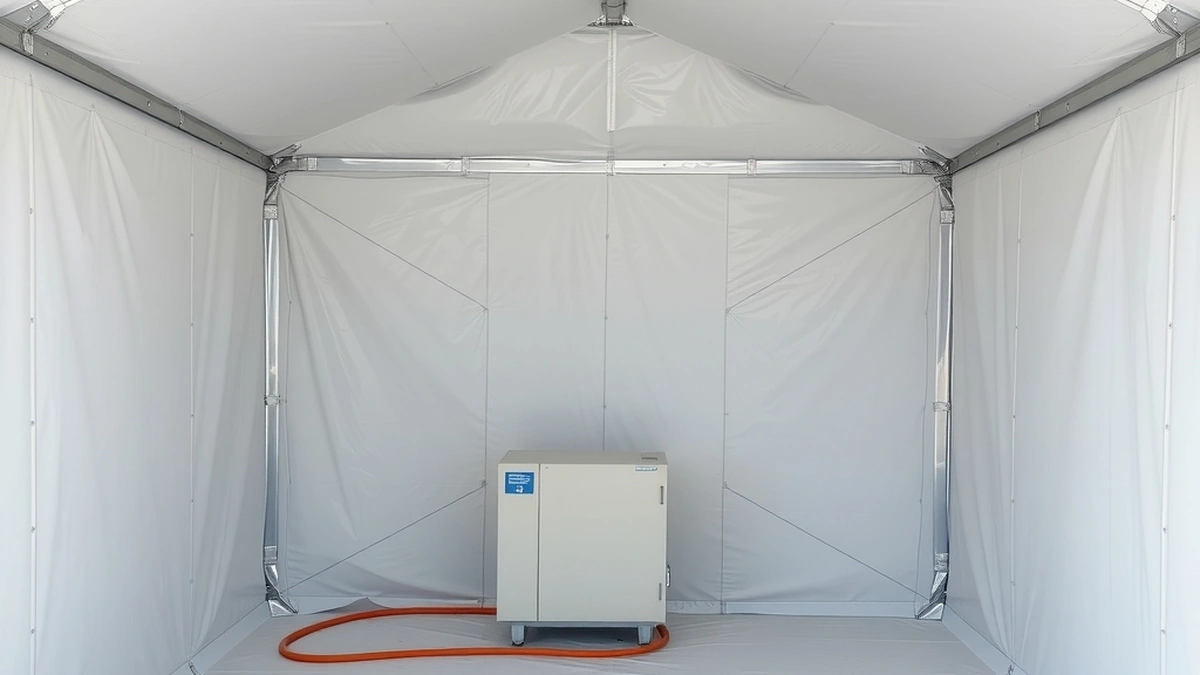
An asbestos enclosure is a temporary containment structure built around material that contains asbestos. It typically uses polyethylene sheeting, taped seams, airlocks, and negative pressure units to keep fibers inside the work zone during abatement. The purpose is to protect occupants and adjacent spaces from exposure while removal, repair, or encapsulation takes place.
Enclosures are not permanent solutions. They are engineered controls meant to last only for the duration of the abatement project. Once the work is complete, the enclosure is decontaminated and removed according to applicable regulations.
Common Enclosure Problems
Several issues can compromise an asbestos enclosure:
- Torn or punctured polyethylene sheeting
- Failed tape at seams or penetrations
- Damaged or improperly installed airlocks
- Negative pressure unit failure or power loss
- Blocked exhaust ducts or filters
- Unsealed penetrations for pipes, conduits, or ventilation
Even a small tear can create a pathway for fibers. Negative pressure must be maintained continuously, and any interruption can reverse airflow and push contaminated air into clean areas. Routine visual checks and pressure monitoring are standard parts of enclosure management.
Signs of Enclosure Failure
Visible damage is the most obvious warning sign. Sheeting that is sagging, torn, or peeling away from walls suggests the barrier is no longer airtight. Tape that is curling, loose, or missing at seams also indicates a potential leak.
Negative pressure alarms are another critical indicator. If the pressure differential between the containment and adjacent areas falls below the required level, the enclosure may no longer contain fibers effectively. Air monitoring results showing elevated fiber counts outside the work area provide objective evidence that containment has been compromised.
Odors or visible dust near the enclosure are not reliable indicators of asbestos, because asbestos fibers are invisible and odorless. Any suspicion of failure should prompt work stoppage and professional assessment rather than informal inspection.
Cost Estimates for Related Work
Addressing enclosure problems often falls within a broader abatement project. Costs vary by material, location, and complexity, and the figures below are estimates only.
| Service | Estimated Cost |
|---|---|
| Bulk asbestos testing | $50–$150 per sample |
| Asbestos survey | $300–$800 |
| General abatement | $20–$50 per square foot |
| Pipe insulation removal | $25–$75 per linear foot |
| Floor tile removal | $10–$25 per square foot |
| Encapsulation | $5–$15 per square foot |
For example, if enclosure repair is needed over a 200-square-foot area and general abatement applies, the estimated cost would be 200 multiplied by $20 to $50, or $4,000 to $10,000. If the project involves 50 linear feet of pipe insulation, the estimate would be 50 multiplied by $25 to $75, or $1,250 to $3,750. These numbers do not include testing, surveys, disposal, or reconstruction, and actual quotes depend on site conditions.
Why Repairs Belong to Professionals
Patching an asbestos enclosure is not a routine maintenance task. Disturbing asbestos-containing material while repairing a barrier can release fibers into the air. Licensed abatement contractors are trained to contain work areas, use negative pressure, handle waste properly, and verify clearance after the job.
Property owners should not attempt to tape over tears, replace sheeting, or adjust negative pressure equipment on an active asbestos enclosure. If an enclosure shows signs of failure, the appropriate step is to contact a qualified abatement firm. More information about professional removal is available at /asbestos-removal-installation/, and guidance on repair options can be found at /asbestos-removal-repair/.
Testing and Survey Costs
Before committing to enclosure repairs or abatement, property owners often need to confirm whether asbestos is present and where it is located. Bulk sampling is estimated at $50–$150 per sample, and a full asbestos survey is estimated at $300–$800. These costs help define the scope of work and determine whether enclosure problems are related to asbestos-containing material or another building issue.
Testing does not repair an enclosure, but it provides the documentation needed for a proper abatement plan. For a comparison between testing and removal services, see /asbestos-removal-vs-asbestos-testing/.
Maintenance and Ongoing Monitoring
Enclosures require monitoring for as long as they are in place. This includes checking negative pressure readings, inspecting sheeting and tape daily, and verifying that airlocks remain functional. If the enclosure will remain for multiple days, a schedule for visual inspections and pressure checks should be established before work begins.
Once abatement is finished, the enclosure itself is removed as potentially contaminated waste. Clearance testing may be required before the area is released for reoccupation. Ongoing building maintenance after abatement is covered at /asbestos-removal-maintenance/.
When to Call a Licensed Contractor
Any visible damage to an asbestos enclosure, loss of negative pressure, or concern about fiber migration should be treated as a serious issue. Work inside the containment should stop, and the area should be isolated until a licensed abatement contractor can assess the situation.
Property owners can review general cost expectations at /asbestos-removal-cost-per-square-foot/ and explore provider selection at /best-asbestos-removal/. DIY approaches to friable asbestos material are not recommended, and enclosure repair should always be left to professionals with the proper training, equipment, and licensing.
Regulatory compliance and worker safety drive every decision around asbestos containment. When an enclosure shows problems, prompt professional attention is the safest course of action.
Next, compare how much does asbestos removal cost, asbestos removal installation, asbestos removal repair before you commit.
Frequently asked questions
What is an asbestos enclosure?
An asbestos enclosure is a sealed containment barrier built around asbestos-containing material during abatement to prevent fibers from escaping into occupied areas.
What causes enclosure problems?
Enclosure problems can result from torn polyethylene sheeting, taped seam failures, damaged airlocks, or negative pressure units that stop maintaining the required pressure differential.
How do I know an enclosure has failed?
Signs include visible sheeting tears, loose tape, smoke or dust escaping at seams, negative pressure alarms, or air monitoring results showing elevated fiber counts outside the containment.
Can I repair an asbestos enclosure myself?
No. Repairing or modifying an asbestos enclosure should be handled by a licensed abatement contractor because improper work can disturb asbestos-containing material and release fibers.
How much does asbestos abatement cost?
Abatement is estimated at $20–$50 per square foot, pipe insulation removal at $25–$75 per linear foot, and floor tile removal at $10–$25 per square foot, depending on the project.
Should I test before fixing enclosure problems?
Yes. Bulk sampling is estimated at $50–$150 per sample and an asbestos survey at $300–$800, helping confirm material condition and scope before any enclosure work begins.
Sources
Some links are affiliate links.If you buy through them we may earn a commission at no extra cost to you. We do not accept payment for rankings. Read the full disclosure.