Encapsulation Maintenance
How to maintain an encapsulated asbestos surface: inspection intervals, the defects that matter, and when repair gives way to removal.
Encapsulation maintenance is periodic inspection of the coating, with touch-up of any cracked, peeled or damaged area. Check at least annually and after any water leak, renovation or impact, and budget a few hundred dollars per inspection visit.
- Inspection interval
- At least once a year
- Extra check after
- Leaks, impact or renovation
- Typical inspection
- A few hundred dollars per visit
- Re-coat rate
- $5 - $15 per sq ft
- Escalation trigger
- Friable material exposed
Some links on this page are affiliate links.If you buy through them we may earn a commission at no extra cost to you. We do not accept payment for rankings. Read the full disclosure.
Encapsulation maintenance is annual inspection plus prompt repair of any breach in the coating. It is not repainting. The coating is the only thing standing between the asbestos and the room, so a crack, a peel or a water stain is a defect that has to be handled by a licensed contractor.
Encapsulation maintenance is the scheduled inspection and repair of a sealant coating applied over asbestos-containing material, carried out to confirm the material stays bound and to catch damage before fibers are released. It is a recurring obligation that comes with choosing encapsulation over removal.
What Maintenance Actually Involves
An inspection visit is a visual and tactile check of every coated surface, plus a review of the area for conditions that could damage the coating. The inspector looks at the film, the edges, the joints and the substrate where visible.
Repair follows the same rules as the original installation: containment, the same or a compatible product, and a record of what was done. A touch-up done without containment is a fiber release with a paintbrush.
The deliverable is an updated record. Each visit adds a dated entry to the file, which is what proves the material has been managed rather than forgotten.
Setting the Inspection Interval
Annual is the baseline for a residential property. Commercial buildings often inspect more frequently where the material is in a public area or subject to vibration.
The interval shortens after specific events. A roof leak, a burst pipe, a plumbing repair in the ceiling above, an impact from furniture or equipment, or any renovation in the room all justify an immediate check. Water is the most common cause of coating failure, because it attacks the bond from behind.
If the building has a maintenance log, the encapsulation inspection belongs in it alongside fire alarm tests and boiler service. If it does not, start one.
The Defects That Matter
Not every mark is a failure. A scuff on a wall coating is cosmetic if the film is intact. The defects that matter are the ones that expose substrate or soften it.
| Defect | What it means | Response |
|---|---|---|
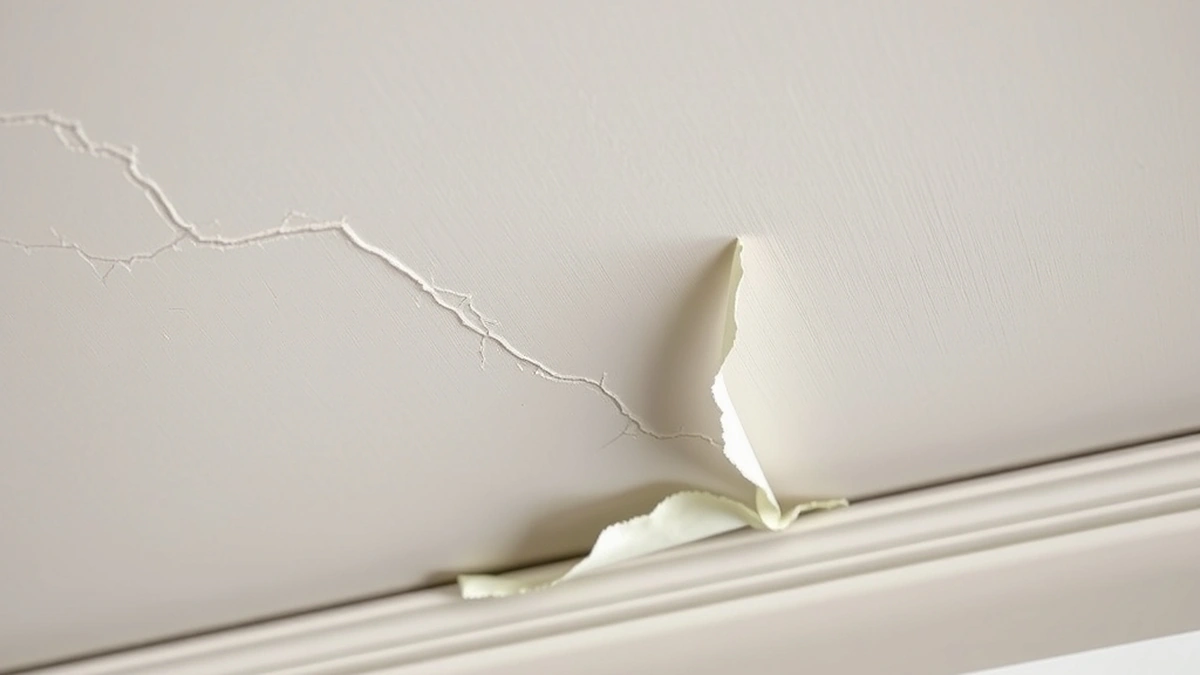
| Hairline cracking | Coating is drying or the substrate is moving | Inspect and monitor, repair if it widens |
| Peeling or blistering | Bond has failed, often from moisture | Repair the area, find the water source |
| Chalking or powdering | Coating is degrading | Re-coat the affected area |
| Visible substrate | Film is breached | Repair promptly under containment |
| Soft or crumbly surface | Material beneath has become friable | Escalate to removal assessment |
| Water staining | Moisture is reaching the material | Fix the leak, then assess the coating |
The last two rows are the ones that change the plan. A soft substrate means the encapsulation is no longer doing its job, and a water stain means the cause has to be fixed before any re-coating.
If you find damage, the sequence is the same every time:
- Keep people out of the room and do not touch the coating.
- Photograph the area and note the date.
- Find and fix any water source before calling anyone.
- Book a licensed contractor to assess and repair under containment.
- Add the repair and the assessment to the property record.
Repair, Re-Coat or Remove
Three responses exist, and the choice depends on how much area is affected and what the substrate is doing.
- Spot repair. A small breach, sound substrate. Priced as a minimum service call plus material.
- Re-coat. Widespread chalking or thinning, sound substrate. Priced at $5 to $15 per square foot for the treated area.
- Removal. Friable substrate, repeated failures, or planned demolition. Priced at $20 to $50 per square foot.
A 120-square-foot ceiling re-coat at $10 per square foot is $1,200. Removing the same ceiling at $35 per square foot is $4,200. The re-coat is the right call once, and usually the wrong call three times in a decade.
What Maintenance Costs Over Time
Budget the inspection as a fixed annual cost. A few hundred dollars per visit is a reasonable planning figure for a residential job. Add repair costs when they occur.
A ten-year example: two inspections at $400 each is $800, plus one 100-square-foot re-coat at $10, which is $1,000. Total $1,800 on top of the original installation. If that installation was 400 square feet at $10, the original was $4,000, so the ten-year total is $5,800.
Compare that with removal at $35 per square foot for the same 400 square feet, which is $14,000. Encapsulation plus maintenance remains cheaper, but the gap narrows every time a repair is needed.
Keeping the Record Usable
The file should contain the original survey, the encapsulation specification, the product data sheet, the application date, the inspection reports and photographs of each repair. A future contractor needs all of it to match products and assess condition.
A property with a documented maintenance history is also easier to sell. A buyer’s inspector who finds a coated ceiling will ask what is under it, and a file answers the question without speculation.
When Maintenance Stops Being Enough
Three situations end the maintenance route. The substrate becomes friable despite the coating, which happens when moisture gets behind it. Damage is widespread enough that repair costs approach removal costs. Or a renovation, sale or demolition will disturb the material within a few years.
In each case the answer is a fresh assessment by a licensed contractor, not another coat. Our guide to encapsulation problems covers the failure modes in more detail, and abatement vs encapsulation explains what changes when removal becomes the better option.
For the cost side, encapsulation cost and asbestos encapsulation cost show how repair and re-coat pricing is built. For the original process, encapsulation installation describes what a sound job looks like, which is the baseline any inspection is measured against. Never scrape, sand or peel a failing coating to see what is underneath; that is the one action that turns a manageable defect into an exposure.
Frequently asked questions
How often should encapsulation be inspected?
At least once a year, and immediately after any water leak, impact damage or renovation work in the area, because those events are what break a coating.
What does encapsulation maintenance cost?
A routine inspection is typically a few hundred dollars, and any re-coating is priced at the original rate of $5 to $15 per square foot for the affected area.
What are the signs a coating is failing?
Cracking, peeling, blistering, chalky residue, visible substrate through the film, water staining and any area where the surface feels soft or crumbly.
Can I touch up a small damaged area myself?
No. Even a small repair disturbs the coating and the material beneath it, so the work requires a licensed contractor using the same product and containment.
Does encapsulated asbestos need to be disclosed?
Yes. The material is still present, so it should be recorded in the property file and disclosed to buyers, lenders and contractors who work in the area.
When should encapsulation be replaced with removal?
When the material beneath has become friable, when damage is widespread, or when a renovation or demolition will disturb the area within a few years.
Sources
Some links are affiliate links.If you buy through them we may earn a commission at no extra cost to you. We do not accept payment for rankings. Read the full disclosure.