Abatement vs Abatement
Two different services are sold as asbestos abatement. Here is how removal abatement and in-place abatement differ in cost, rules and outcome.
Abatement covers two different jobs. Removal abatement takes the asbestos out at $20 to $50 per square foot. In-place abatement seals or encloses it at $5 to $15 per square foot. Same word, different scope, different paperwork and a different result.
- Removal abatement
- $20 - $50 per sq ft
- In-place abatement
- $5 - $15 per sq ft
- Removal outcome
- Material leaves the building
- In-place outcome
- Material stays, sealed
- Decided by
- Material condition and future plans
Some links on this page are affiliate links.If you buy through them we may earn a commission at no extra cost to you. We do not accept payment for rankings. Read the full disclosure.
“Abatement” is used for two different jobs, and the difference decides your budget. Removal abatement takes the asbestos out of the building at $20 to $50 per square foot. In-place abatement seals or encloses it at $5 to $15 per square foot and leaves it there. Both are legitimate, both are regulated, and they are not interchangeable.
Asbestos abatement is a controlled intervention that stops asbestos-containing material from releasing fibers. Under that definition, removal, encapsulation and enclosure all qualify, which is why a quote that says “abatement” without naming the method is not a quote yet.
Two Meanings, One Word
The regulatory meaning is broad. Abatement is the set of measures applied to asbestos-containing material, and the three standard measures are removal, encapsulation and enclosure. A contractor’s invoice that just says “abatement” could refer to any of them.
The trade meaning is narrow. Most homeowners and many contractors use abatement to mean removal, with encapsulation priced separately. That is where comparisons go wrong: two quotes labeled “abatement” can describe different scopes and different results.
The practical fix is to ask one question before comparing prices: is the material leaving the building or staying? Everything else follows from the answer.
Removal Abatement: What You Get
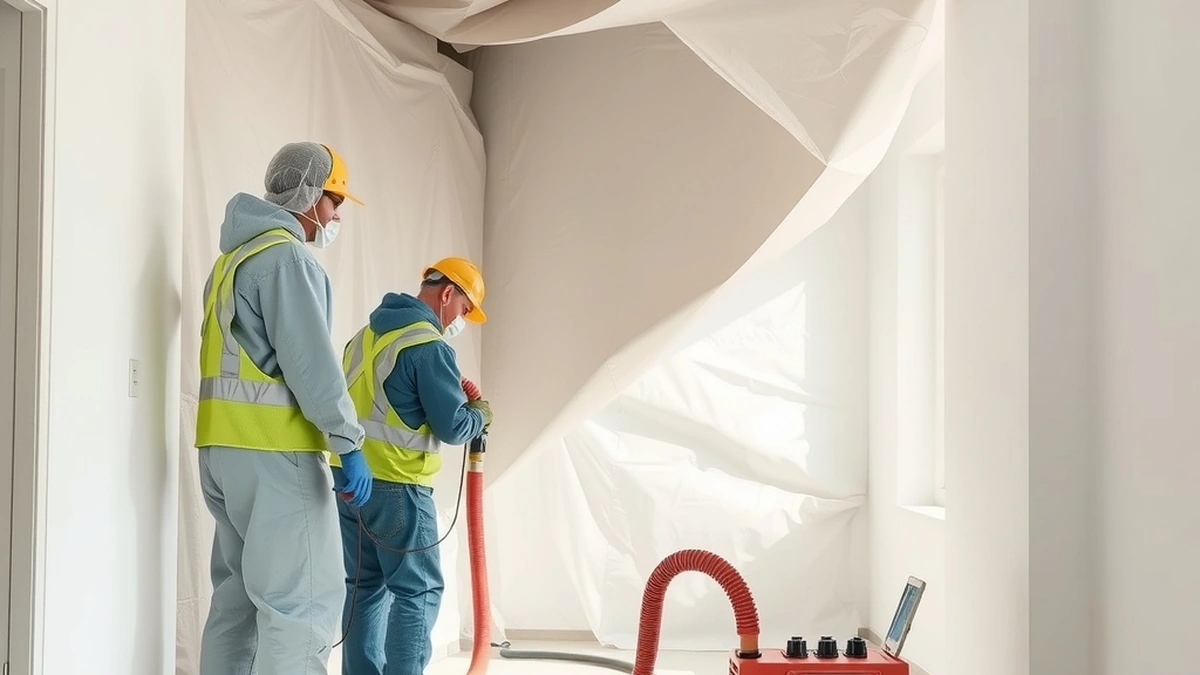
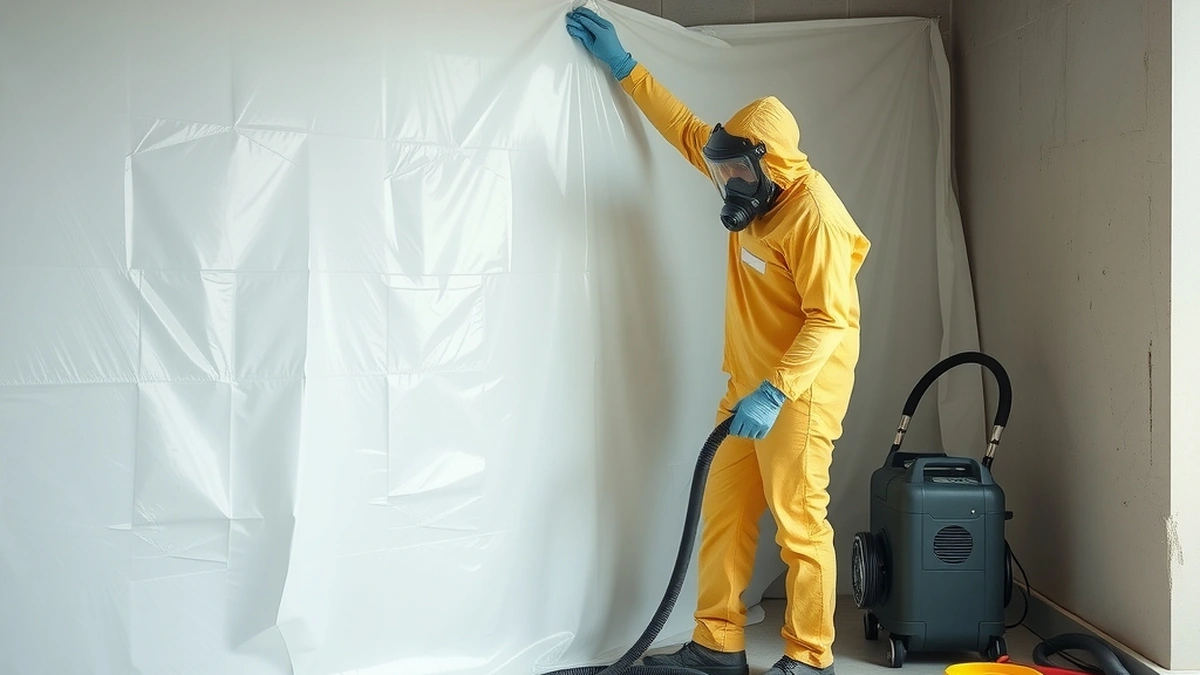
Removal means the material comes out under containment, is bagged, manifested and hauled to a landfill permitted to accept asbestos. The area is then cleaned and clearance tested.
The price is $20 to $50 per square foot for general abatement, with pipe insulation at $25 to $75 per linear foot and floor tile at $10 to $25 per square foot. Those rates cover containment, labor, waste packaging, transport and disposal.
What you get for that money is a building with one less unknown. Future renovation, demolition and sale all get simpler, because the material is gone and the paperwork proves it.
In-Place Abatement: What You Get
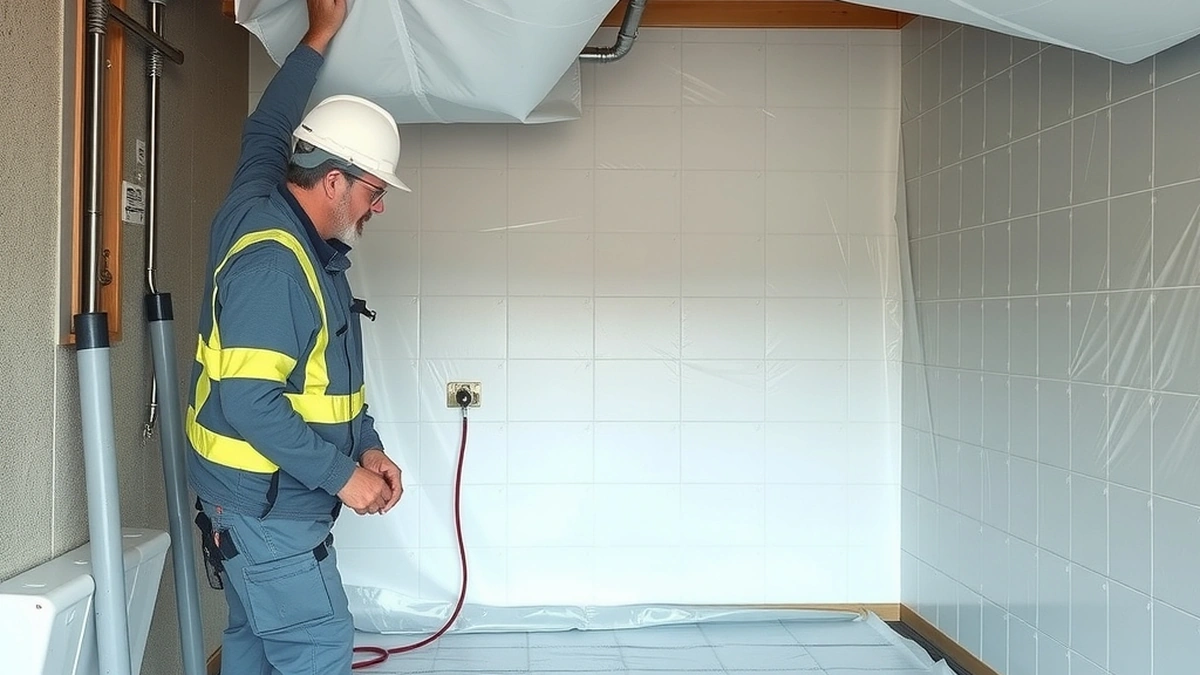
Encapsulation applies a sealant that binds the fibers. Enclosure builds a rigid barrier over the material. Both leave the asbestos where it is.
The price is $5 to $15 per square foot. The area is prepared, the coating or barrier is installed, and the surface is inspected. No regulated waste is generated, so there is no manifest and no landfill fee.
What you get is a controlled surface, not a resolved building. The material still exists, still needs periodic inspection, and still has to be handled if the area is ever demolished or heavily renovated.
Costed Side by Side
The table below uses the canonical rates on a 400-square-foot area, with the arithmetic shown.
| Measure | Removal abatement | In-place abatement |
|---|---|---|
| Rate | $20 - $50 per sq ft | $5 - $15 per sq ft |
| 400 sq ft low | 400 x $20 = $8,000 | 400 x $5 = $2,000 |
| 400 sq ft high | 400 x $50 = $20,000 | 400 x $15 = $6,000 |
| Waste and manifest | Included | None generated |
| Clearance testing | Required | Inspection instead |
| Duration | Several days | One to two days |
| Material removed | Yes | No |
At midpoint the gap is $14,000 against $4,000. That difference buys certainty, and whether certainty is worth $10,000 depends on what you plan to do with the building.
Where the Rules Diverge
Removal triggers the full regulatory chain: notification before work in many jurisdictions, containment, worker protection, waste manifests and clearance testing. The paperwork is heavier because the hazard is being moved.
In-place work is regulated too, but the obligations are different. Encapsulation must be suitable for the material, cannot be applied over friable or damaged surfaces, and has to be documented. Some states limit it in plenums or on impact-prone surfaces.
Both routes require a licensed contractor. Neither is a homeowner project, and neither is something a general handyman can sign off on.
Choosing Between Them in Five Steps
- Read the survey report and find the condition of each material: sound, damaged or friable.
- Rule out in-place work for any friable or water-damaged material, because it cannot be sealed reliably.
- Ask whether a renovation will disturb the area within the next several years, which favors removal.
- Price both routes on the same square footage, including testing and inspection.
- Add the ten-year cost of re-inspection and re-coating to the in-place figure before comparing.
Step five is the one that rarely gets done. Two inspections and a partial re-coat can add $1,000 to $2,500 to a small encapsulation job, which narrows the gap without closing it.
Common Mistakes in Comparing the Two
The first mistake is comparing a removal quote that includes clearance testing with an encapsulation quote that does not include post-work inspection. Add the missing line to both before deciding.
The second is assuming encapsulation is always permitted. It is not, and a quote that proposes it without an inspector’s condition report is guessing.
The third is treating encapsulation as permanent. It is a maintenance commitment, and a failed coating on a ceiling is a removal job with extra steps.
The fourth is forgetting disclosure. In-place abatement does not remove the obligation to tell a buyer, a lender or a future contractor that asbestos is present.
A Mixed Approach Is Normal
Many buildings use both. Material in a bathroom scheduled for renovation gets removed, while sound ceiling coating in a hallway that will not be touched gets encapsulated. That is not inconsistency; it is matching the method to the condition and the plan.
For the detailed comparisons, read abatement vs encapsulation and abatement vs enclosure. For the removal numbers, see abatement cost and disposal cost. For the sealing side, encapsulation cost shows how the lower rate is built up. Whichever route the report supports, the work belongs with a licensed abatement contractor, and no one should test the difference by prying at the material.
Frequently asked questions
What does abatement actually mean?
In regulation it means a set of measures to control asbestos, which can be removal, encapsulation or enclosure. In common use it usually means removal, which causes the confusion.
Is removal abatement better than in-place abatement?
Removal is more thorough and settles the issue permanently, but it costs $20 to $50 per square foot and generates regulated waste, so it is not always the right choice.
How much cheaper is in-place abatement?
Encapsulation or enclosure runs $5 to $15 per square foot, so a 400-square-foot area costs $2,000 to $6,000 instead of $8,000 to $20,000 for removal.
Does in-place abatement have to be disclosed at sale?
Yes. The material remains in the building, so it should be documented, disclosed and re-inspected on a schedule rather than treated as resolved.
Can both methods be used in one building?
Yes. A mixed approach is common, with removal in areas due for renovation and encapsulation on sound material that will stay undisturbed.
Which method does an inspector recommend?
The report should state condition and location, and those two facts decide the method. Friable or damaged material generally has to be removed.
Sources
Some links are affiliate links.If you buy through them we may earn a commission at no extra cost to you. We do not accept payment for rankings. Read the full disclosure.