Asbestos Inspection Cost
What an asbestos inspection costs, how per-sample pricing works, and how an inspection differs from a survey and clearance testing.
An asbestos inspection costs $50 to $150 per sample, and a full survey with a written report runs $300 to $800. Most homes need two to five samples, so a typical inspection lands between $100 and $750 before any abatement is priced.
- Bulk testing
- $50 - $150 per sample
- Full survey
- $300 - $800
- Typical home samples
- 2 - 5 distinct materials
- Turnaround
- Lab results in a few business days
- Who inspects
- Trained and accredited inspectors
Some links on this page are affiliate links.If you buy through them we may earn a commission at no extra cost to you. We do not accept payment for rankings. Read the full disclosure.
An asbestos inspection costs $50 to $150 per sample, and a full survey with a written report runs $300 to $800. Most houses need two to five samples because each distinct material is sampled separately. The inspection is the cheapest part of the project and the one that decides everything after it.
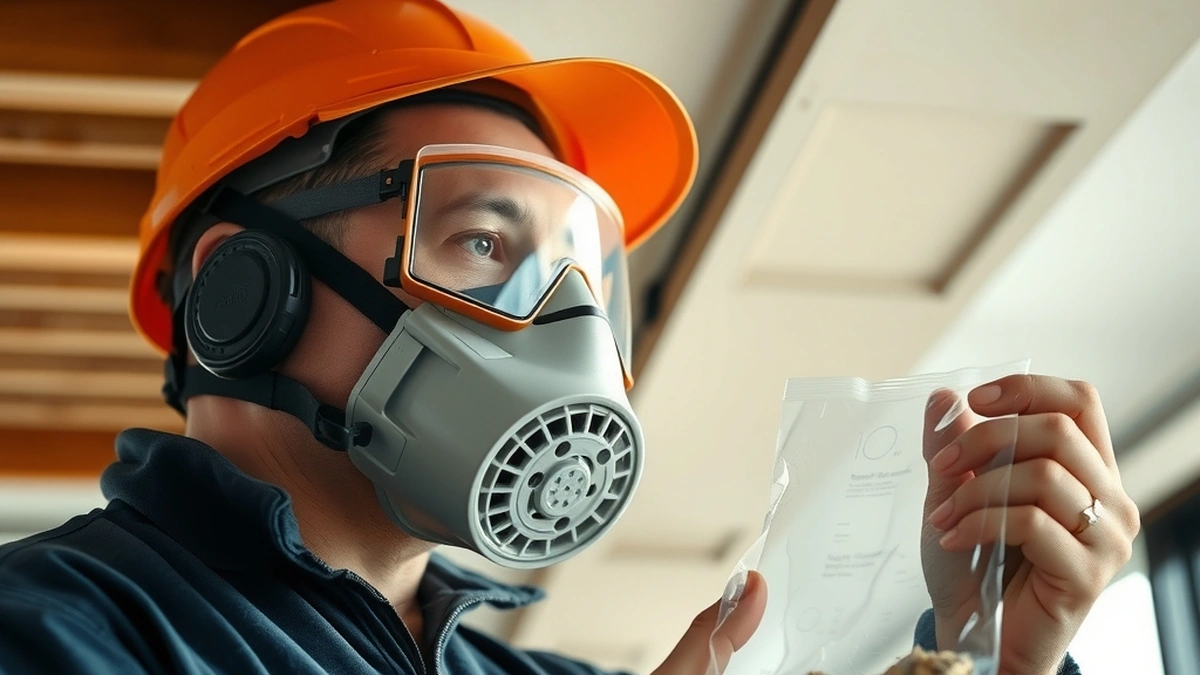
An asbestos inspection is a site visit by a trained and accredited inspector who identifies suspect materials, collects bulk samples and sends them to an accredited laboratory for analysis. It is not a home inspection with an extra line item, and it is not something a contractor should improvise on the day removal starts.
What the Visit Actually Covers
The inspector walks the property and lists every material that could contain asbestos: ceiling texture, joint compound, floor tile and mastic, pipe and duct insulation, boiler lagging, siding, roof shingles and older window glazing. Each distinct material gets its own sample, because a negative result on the ceiling says nothing about the floor.
Samples are taken with a wet method to limit dust, sealed in labeled bags and sent to a lab. The lab uses polarized light microscopy, and results usually return in a few business days. The inspector then writes up locations, condition and quantities.
That written report is the deliverable. A verbal “looks like it might be” is not an inspection.
Per-Sample Pricing and Why the Count Matters
At $50 to $150 per sample, the total depends almost entirely on how many materials are in play. Three samples at $100 is $300. Five samples at $80 is $400. Two samples at $150 is also $300, which shows that the rate matters as much as the count.
| Property | Samples | Cost at $50-$150 each |
|---|---|---|
| Condo with one textured ceiling | 2 | 2 x $50 = $100 to 2 x $150 = $300 |
| 1970s ranch with tile and ceiling texture | 4 | 4 x $50 = $200 to 4 x $150 = $600 |
| Older home with pipes, boiler and tile | 5 | 5 x $50 = $250 to 5 x $150 = $750 |
Those are estimates. Travel time, after-hours visits and rush lab turnaround can push a quote above the per-sample math, and a large commercial property is priced by scope rather than by sample count.
Our guide to asbestos testing cost covers lab pricing in more detail, and the asbestos test kit page explains why a mail-in kit is not a substitute for an accredited inspection when the material will be disturbed.
Survey Pricing and What Moves It
A full survey runs $300 to $800 and includes the inspection, the sampling, the lab fees and the written report. The report should map each material, state its condition and give approximate quantities so a contractor can price the work.
Four things move the number:
- Size. A 900-square-foot condo and a 4,000-square-foot commercial building are different scopes.
- Access. Crawlspaces, locked mechanical rooms and roofs add time.
- Complexity. Multiple additions and renovations mean multiple material eras.
- Purpose. A pre-demolition survey that must be destructive costs more than a management survey that only documents condition.
The asbestos survey cost page breaks down the survey types in more detail.
Inspection, Survey and Clearance Testing Are Different
These three get confused constantly, and the confusion shows up in budgets. They are separate services with separate prices.
| Service | When it happens | What it produces | Cost basis |
|---|---|---|---|
| Inspection | Before work is scoped | Sample results and a site list | $50-$150 per sample |
| Survey | Before work is scoped | Written report with locations and quantities | $300-$800 |
| Clearance testing | After abatement | Air samples confirming the area is clean | Priced per project, quoted separately |
Clearance testing is the post-work check, and it is not included in the inspection price. Ask for it as a separate line on the abatement quote, because it is the only evidence the containment worked.
What Can Add to the Bill
Rush lab results, weekend visits and travel to rural properties all carry surcharges. So does destructive sampling, where the inspector has to open a wall or pull a section of flooring to reach a material. Confined-space entry into a crawlspace or a sealed mechanical room adds time and equipment.
Re-inspection after a failed clearance is another cost that appears late. It is not part of the original inspection, and it is usually billed at the same rate as the first visit.
Booking an Inspection in Five Steps
- Describe the property’s age and the materials you are worried about when you call, so the inspector brings enough sample kits.
- Ask whether the price is per sample or a flat survey fee, and what the report includes.
- Confirm the inspector’s accreditation and the laboratory’s accreditation before the visit.
- Keep the sampled areas sealed off until results return, and do not sweep up debris in the meantime.
- File the report with the property records, because the next contractor, buyer or lender will ask for it.
Step four matters. Disturbing the material between sampling and abatement makes the job more expensive and the exposure worse.
Reading the Report Before You Hire Anyone
A usable report names the material, the room or elevation, the sample number, the lab result and the condition. Condition drives the method: sound material may be a candidate for encapsulation, while damaged material is a removal job.
If a report lists a material as “assumed” rather than “sampled,” that is not a result. Assumed materials are priced as if they contain asbestos, which inflates the job. Ask why the material was not sampled before you accept that scope.
The Cost of Skipping It
Skipping an inspection does not save $300 to $800. It moves that money to the end of the project, where it becomes a stop-work order, a re-quote or a contaminated demolition. Contractors cannot legally price removal they have not identified, and landfills will not take waste without the paperwork.
For the downstream numbers, read asbestos removal cost and disposal cost. Neither can be quoted honestly without the inspection report first, which is why this is the one line item worth paying for early.
Frequently asked questions
How much does an asbestos inspection cost?
Bulk sampling runs $50 to $150 per sample, and a full survey with a written report costs $300 to $800, so most single-family inspections fall inside that combined range.
How many samples will my house need?
One per distinct material. A house with ceiling texture, floor tile and pipe insulation needs at least three, and each is billed separately.
Is an inspection the same as a survey?
An inspection is the site visit and sampling. A survey is the full deliverable, including the report that maps each material, its condition and its location.
Do I need an inspection before selling a house?
Federal rules do not require it for every sale, but lenders, buyers and some states do, and any renovation that disturbs suspect material needs one first.
Can a home inspector sample for asbestos?
Only if that person holds the required asbestos training and accreditation. A standard home inspection does not include asbestos sampling.
What happens if a sample comes back positive?
The report identifies the material, its condition and its extent, which lets a licensed abatement contractor price removal or encapsulation accurately.
Sources
Some links are affiliate links.If you buy through them we may earn a commission at no extra cost to you. We do not accept payment for rankings. Read the full disclosure.